When Should You Start Getting Mammograms?
The Question Sounds Simple, But the Answer Can Feel Confusing
One of the most confusing mammogram questions is: "When am I supposed to start?"
And honestly, I understand why it feels confusing. Because you may hear one answer from one person, another answer online, and something slightly different from your doctor.
So let's keep this calm.
When you should start getting mammograms depends on your country, healthcare system, personal risk level, family history, and whether you have symptoms.
That is why this question is not always answered well by one quick internet search.
Why Mammogram Starting Ages Can Differ
Many screening guidelines discuss starting routine screening around age 40 for women at average risk, but recommendations can differ between organisations and countries.
Some recommend yearly screening from a certain age. Others recommend every two years. Some allow personal choice within a certain age range.
That is why you may hear different advice. It does not mean one person is lying to you or that nobody knows what they are doing. It often means different guidelines are written for different healthcare systems and population-level recommendations.
Guidelines Are Built for Populations, But Your Body Is Not a Population
Guidelines are useful. They help healthcare systems decide when screening is likely to offer benefit for groups of people.
But your personal situation still matters.
That includes your age, family history, symptoms, previous breast imaging, genetic risk, breast density, and any concerns your healthcare provider has identified. This is why your doctor's advice may sometimes be more specific than a general article online.
Average Risk and Higher Risk Are Not the Same
You may need earlier or different screening if you have a strong family history of breast cancer, a known genetic risk, previous chest radiation, previous breast cancer, or other risk factors your healthcare provider identifies.
Some women may need mammography. Some may need ultrasound. Some may need MRI. Some may need a combination.
That is not something you should be expected to figure out alone from Google. Your risk level should be discussed with a healthcare provider who can look at your full picture.
Symptoms Are Different From Routine Screening
Routine screening is usually done when you do not have breast symptoms.
But if you notice a breast change — a lump, nipple discharge, skin dimpling, nipple changes, persistent focal pain, or anything that feels unusual for you — please do not wait for a future screening age.
Discuss it with a healthcare provider. You may be sent for diagnostic imaging, which could include ultrasound, mammography, or other imaging depending on your age and clinical situation.
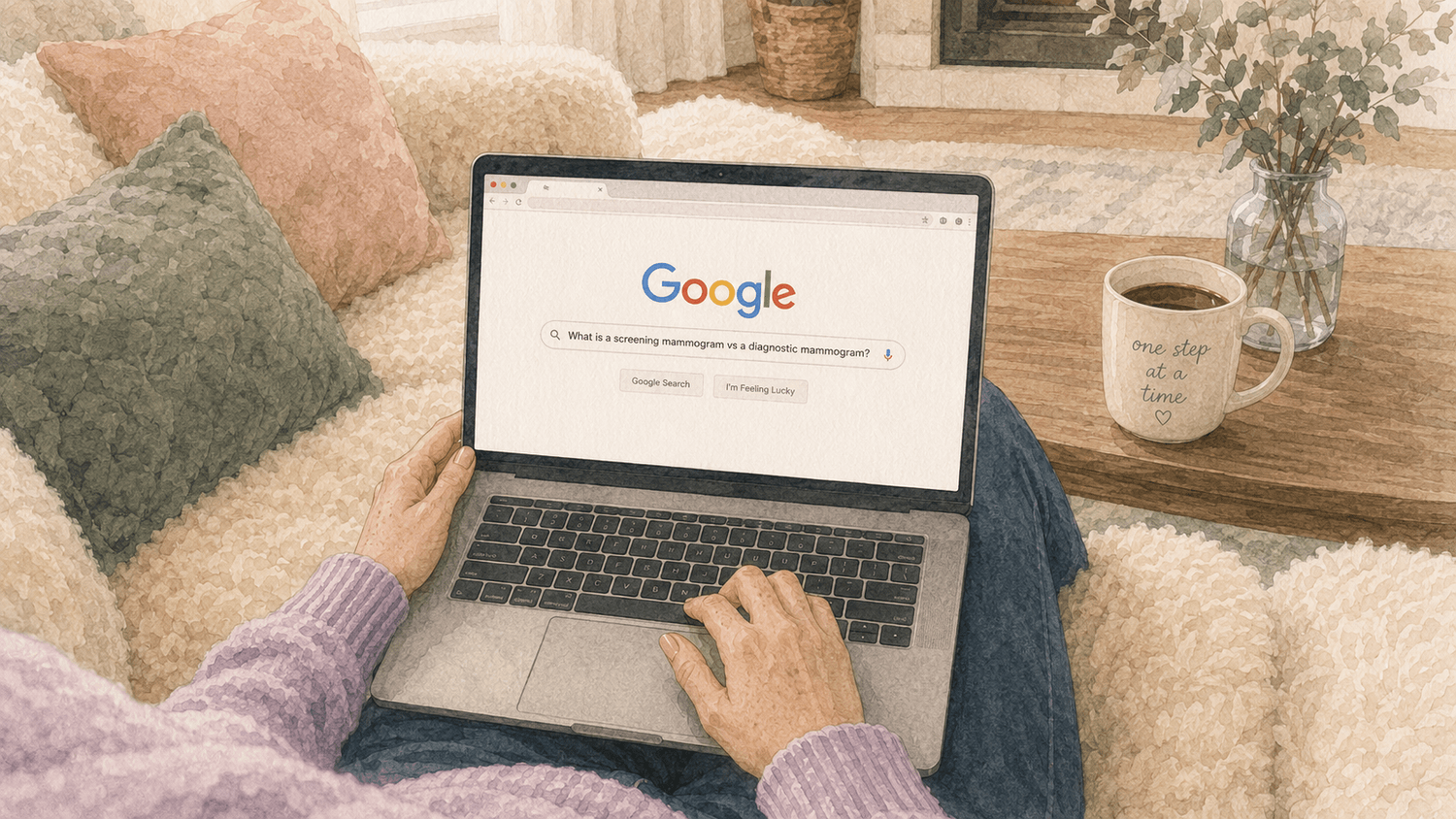
If you are unsure about the difference between routine screening and being sent because of a specific concern, this post explains it clearly: Screening vs Diagnostic Mammogram: What Is the Difference?
Questions to Ask Your Healthcare Provider
You can ask your healthcare provider:
"When should I start screening based on my personal risk?"
"How often should I screen?"
"Do I need a mammogram, ultrasound, MRI, or a combination?"
"What should I do if I notice a change between screenings?"
"Am I considered average risk or higher risk?"
These questions are not overreacting. They are responsible. You deserve to understand the reason behind the recommendation you are given.
Do Not Let Online Arguments Make the Decision for You
Online discussions about mammogram timing can become very loud. One person says start early. Another says wait. Another shares a scary story.
Your screening plan should not be built from comment sections.
It should be built from your risk, your symptoms, your age, your medical history, and your healthcare provider's guidance.
You do not need louder advice. You need clearer context.
Once You Know You Need One, Prepare Properly
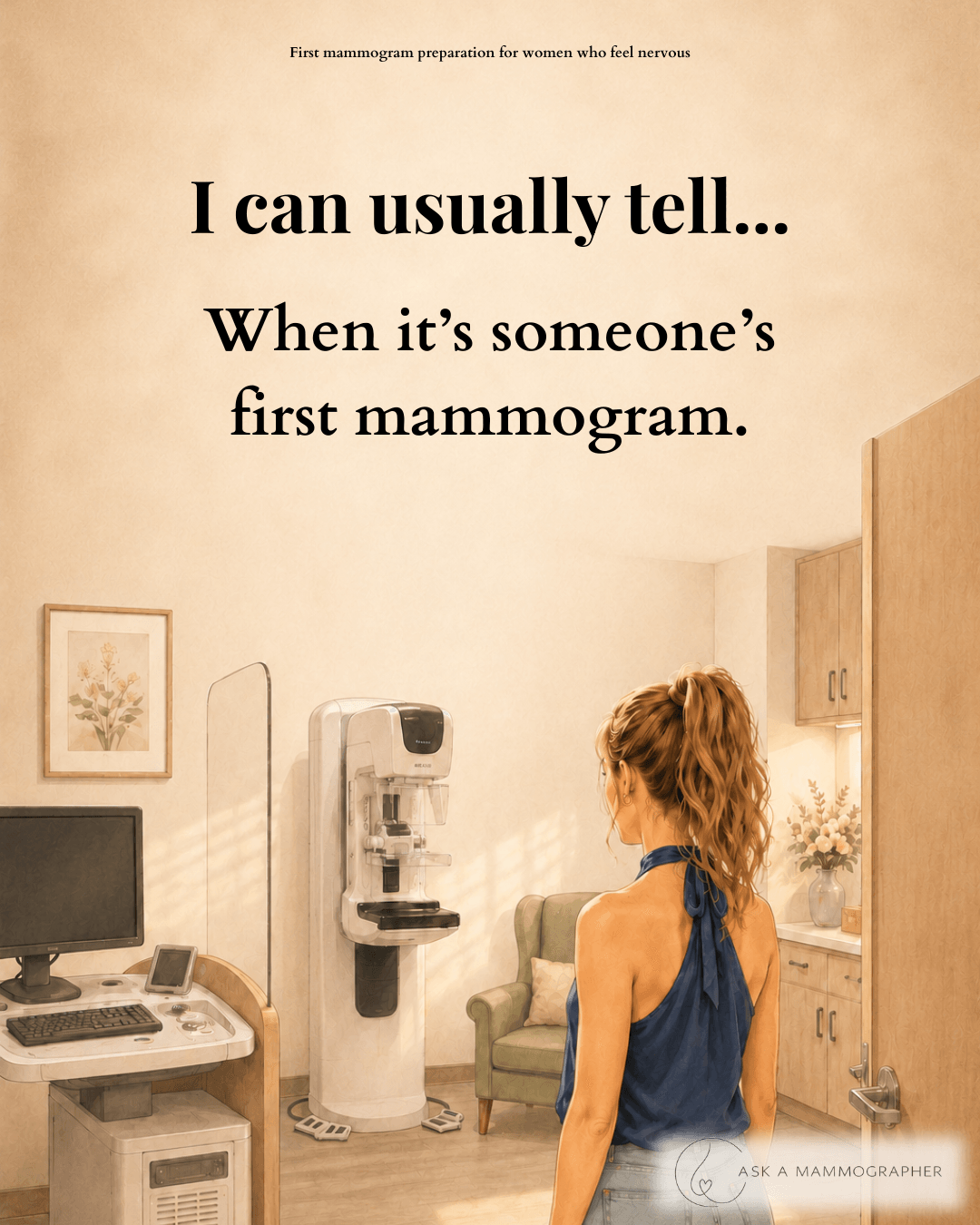
Once your healthcare provider has recommended a mammogram, the most useful next step is understanding what to expect before you walk into the room.
This post walks you through how to prepare practically without turning it into a full research project: How to Prepare for Your First Mammogram Without Overthinking Everything
A Calm First Step Before Your Appointment
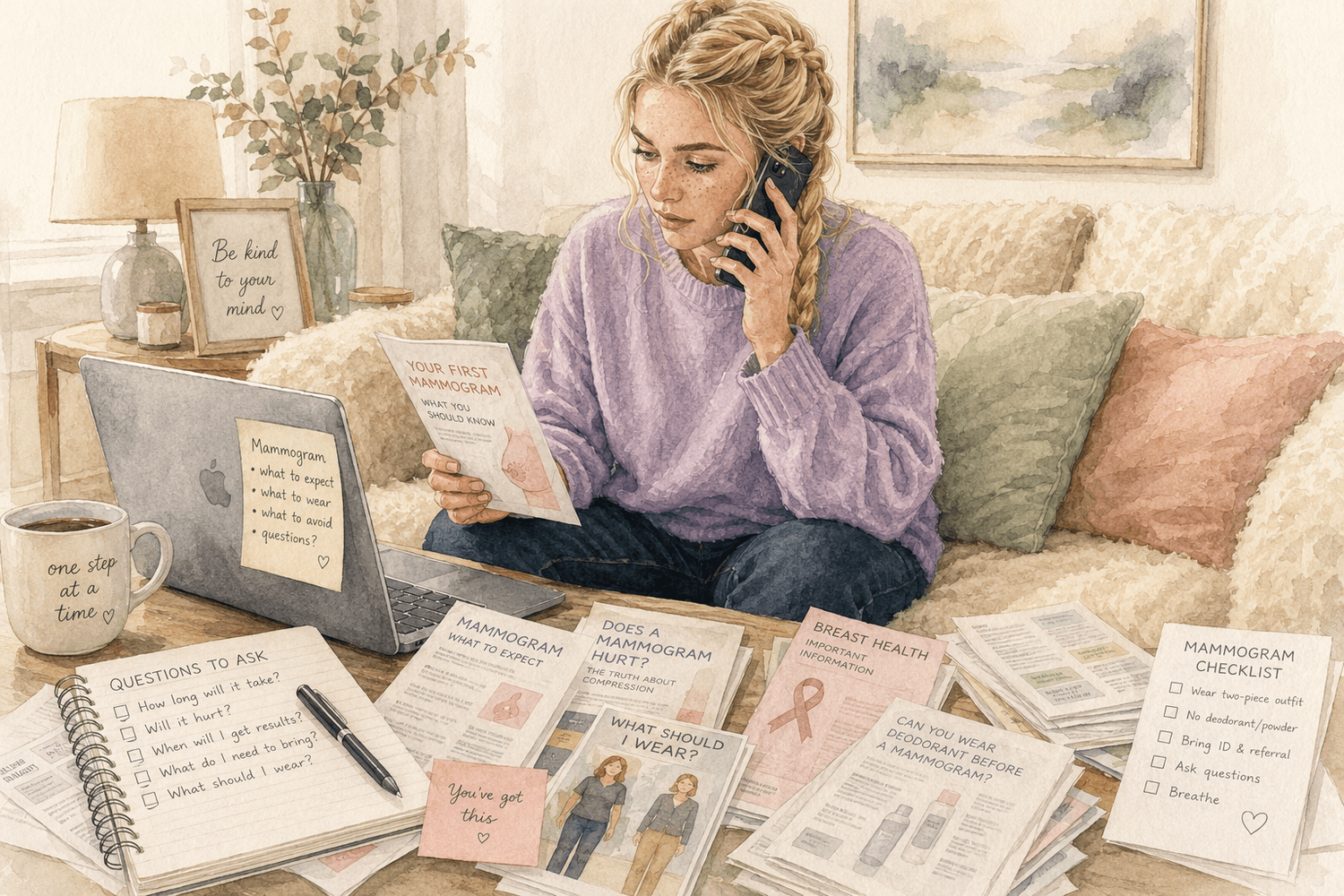
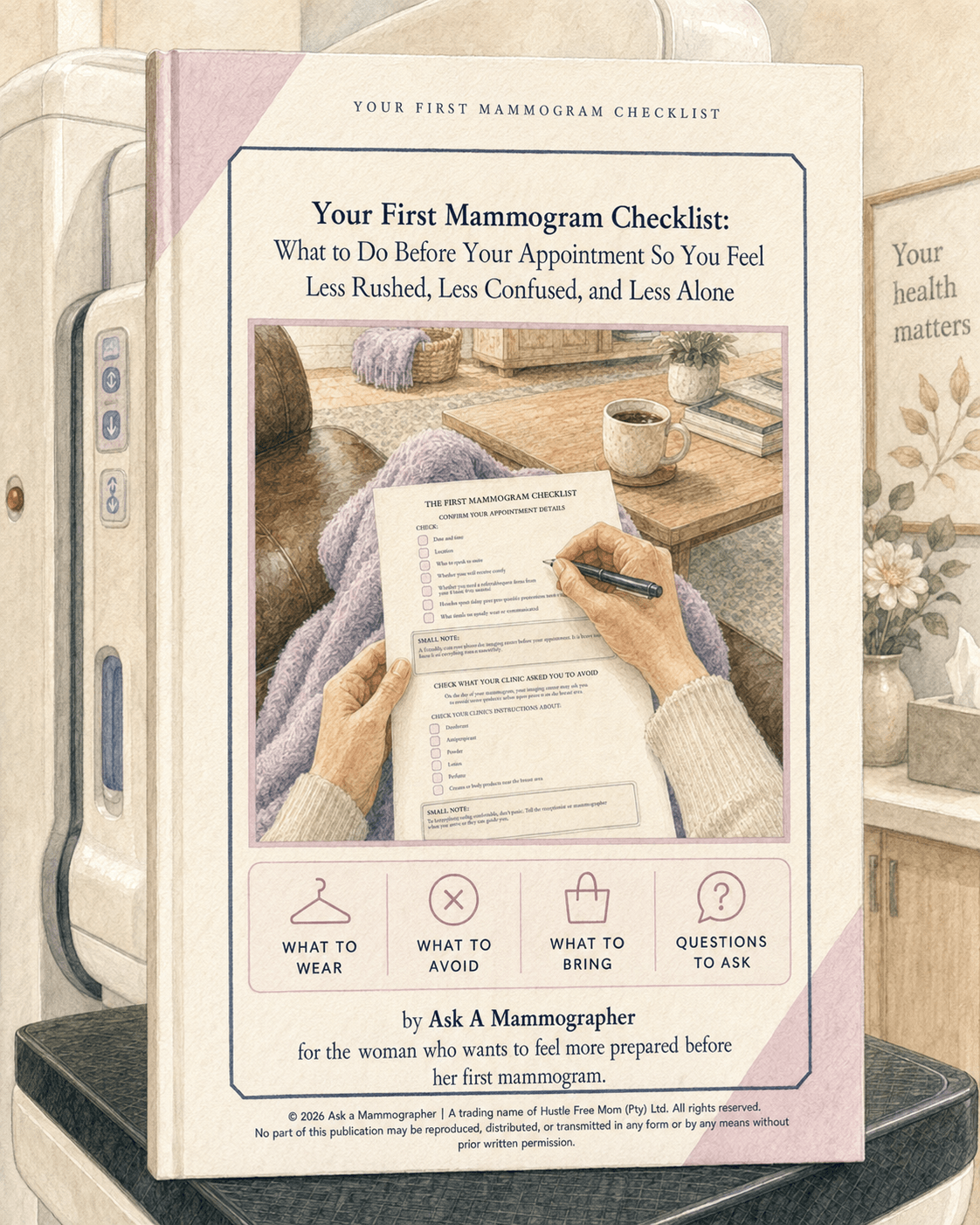
Once you know a mammogram is coming, the free checklist is a good practical starting point.
What to wear. What to avoid. What to bring. What to ask. From a mammographer's perspective, in one place.
It is free.
Grab it here: Get the Free First Mammogram Checklist
Written by: Ask a Mammographer
This article is for general educational purposes only and is not a substitute for medical advice, diagnosis, or treatment. Always follow the guidance of your doctor, radiologist, mammographer, or healthcare provider, especially if you have symptoms, personal risk factors, or specific instructions for your appointment
Disclaimer
This guide has been created to support and prepare you for your mammogram experience. It is based on professional knowledge and real-world practice. It is not a substitute for medical advice, diagnosis, or treatment. Always follow the advice of your doctor, radiologist, or healthcare provider. Individual experiences may vary.
Follow me on Instagram

Grab Your Free First Mammogram Checklist
Have a question?
The content on this website is for general educational purposes only and does not replace medical advice, diagnosis, or treatment. Always follow the guidance of your doctor, radiologist, mammographer, or healthcare provider.
© 2026 Ask a Mammographer | A trading name of Hustle Free Mom (Pty) Ltd. All rights reserved.
Have a Question?
Follow me on Instagram
for Breast Related Information
The content on this website is for general educational purposes only and does not replace medical advice, diagnosis, or treatment. Always follow the guidance of your doctor, radiologist, mammographer, or healthcare provider.
© 2026 Ask a Mammographer | A trading name of Hustle Free Mom (Pty) Ltd. All rights reserved.