
Screening vs Diagnostic Mammogram: What Is the Difference?
The Words Can Sound Similar, But They Don't Mean the Same Thing
The words screening mammogram and diagnostic mammogram can sound very similar. But they don't mean exactly the same thing. And if you have seen the word "diagnostic" on your referral or appointment information, I understand why your stomach may have dropped a little.
That word sounds serious. It can feel like the appointment already knows something you don't.
So let's slow it down.
Diagnostic doesn't automatically mean cancer. It means the imaging has a more specific question to answer.
What Is a Screening Mammogram?
A screening mammogram is usually done when you don't have breast symptoms.
It's a routine check used to look for early changes in the breast tissue, sometimes before anything can be felt.
A screening mammogram is more like: "Let's check for early changes."
The goal is to look for anything that may need further attention, even if you feel completely well and haven't noticed any breast changes yourself.
This is why screening mammograms are often part of regular breast health checks, depending on your age, risk factors, local guidelines, and your healthcare provider's advice.
What Is a Diagnostic Mammogram?
A diagnostic mammogram is done when there is something specific that needs a closer look.
That may be a lump, nipple discharge, breast pain, skin changes, a change found by your doctor, or something seen on a previous screening mammogram that needs more information.
A diagnostic mammogram is more like: "Let's look more carefully at this particular concern."
That word diagnostic can sound frightening, but it doesn't tell you the outcome. It tells you the reason for the imaging. The imaging team is being asked to answer a more specific question.
Diagnostic Does Not Automatically Mean Cancer
This part matters.
Diagnostic doesn't automatically mean cancer. It means there's a reason to look more carefully.
Sometimes that reason is a symptom. Sometimes it's a previous image that needs clarification. Sometimes it's an area that the radiologist wants to assess with extra views or additional imaging.
That can feel unsettling, especially when you're already anxious.
But the type of mammogram doesn't define the outcome. The distinction is primarily about the clinical reason for the exam and how the radiologist approaches interpreting the images.
It simply helps the imaging team understand what question they are trying to answer.
How the Appointment May Feel Different
A screening mammogram often follows a more standard set of images.
A diagnostic mammogram may include additional views, spot compression, magnified images, ultrasound, or a radiologist reviewing images while you are still there, depending on the facility and the reason for the exam.
This doesn't mean something is definitely wrong. It means the imaging may be more focused.
The team may need more detail from a certain area, a different angle, or another type of imaging to help answer the question properly.
That's why a diagnostic appointment can sometimes take longer than a routine screening appointment.
Why You May Be Called Back After a Screening Mammogram
Sometimes a woman goes for a screening mammogram and is later asked to return for more imaging.
That can feel terrifying. But being called back doesn't automatically mean cancer either. It may mean the radiologist needs a clearer look, wants to compare an area more carefully, or needs extra images because something wasn't fully clear on the first set.
The unknown is often the hardest part. That's why it helps to understand that additional imaging is part of the process for some women, not an automatic diagnosis.
If callbacks are something your brain keeps worrying about, this post explains in detail what they usually mean, why they happen, and what to ask next: What Does It Mean If You Get Called Back After a Mammogram?

Questions You Can Ask Before Your Appointment
Understanding which type of appointment you are having helps you ask better questions and feel less caught off guard by the process.
You can ask your healthcare provider:
"Is this a screening mammogram or a diagnostic mammogram?"
"What is the reason for the referral?"
"Should I expect ultrasound as well?"
"How will I receive my results?"
Those questions are not dramatic. They are useful.
You are allowed to understand the purpose of your appointment before you walk into it.
Questions You Can Ask at the Imaging Centre
You can also ask the imaging centre what to expect on the day.
You may want to ask whether you should bring previous mammogram images, how long the appointment may take, whether ultrasound might be done, and when you should expect results.
You may not receive medical answers from the mammographer in the room, depending on the protocols where you are being imaged.
But you can still ask about the process. You can ask what is happening next. You can ask who will give you your results.
That kind of clarity can make the appointment feel less like a blur.
The Type of Mammogram Helps Guide the Process
A screening mammogram and a diagnostic mammogram are both breast imaging exams, but they are used in different situations.
A screening mammogram is usually for routine checking when there are no symptoms.
A diagnostic mammogram is used when there is a specific concern or question that needs closer investigation.
One is not "good" and the other "bad." They simply have different jobs. And knowing which one you are having can help you understand the appointment more clearly.
If you want a calm overview of what actually happens in the mammogram room regardless of which type you are having, this post walks you through the full appointment from arrival to leaving: What to Expect at Your First Mammogram

A Calm First Step Before Your Appointment
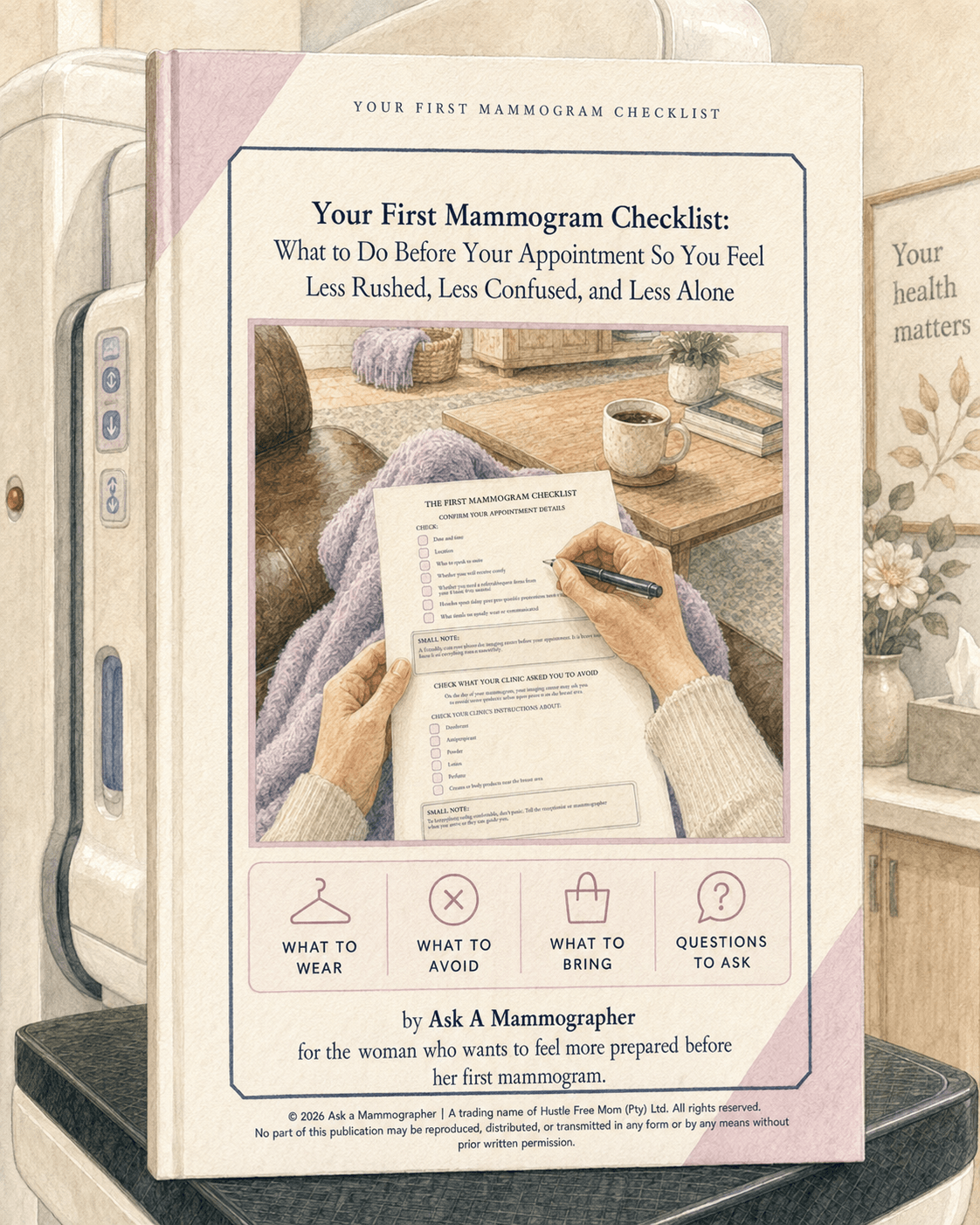
Whether you are going for a screening or a diagnostic mammogram, the practical preparation is largely the same — what to wear, what to avoid, what to bring, and what you are allowed to ask in the room.
The First Mammogram Checklist puts all of that in one place. From a mammographer's perspective. Free.
If your appointment is coming up and you want to feel a little more organised before you walk in, grab the free checklist here: Get the Free First Mammogram Checklist
Written by: Ask a Mammographer
This article is for general educational purposes only and is not a substitute for medical advice, diagnosis, or treatment. Always follow the guidance of your doctor, radiologist, mammographer, or healthcare provider, especially if you have symptoms, personal risk factors, or specific instructions for your appointment


Disclaimer
This guide has been created to support and prepare you for your mammogram experience. It is based on professional knowledge and real-world practice. It is not a substitute for medical advice, diagnosis, or treatment. Always follow the advice of your doctor, radiologist, or healthcare provider. Individual experiences may vary.
Follow me on Instagram

Grab Your Free First Mammogram Checklist
Have a question?
The content on this website is for general educational purposes only and does not replace medical advice, diagnosis, or treatment. Always follow the guidance of your doctor, radiologist, mammographer, or healthcare provider.
© 2026 Ask a Mammographer | A trading name of Hustle Free Mom (Pty) Ltd. All rights reserved.
Have a Question?
Follow me on Instagram
for Breast Related Information

The content on this website is for general educational purposes only and does not replace medical advice, diagnosis, or treatment. Always follow the guidance of your doctor, radiologist, mammographer, or healthcare provider.
© 2026 Ask a Mammographer | A trading name of Hustle Free Mom (Pty) Ltd. All rights reserved.