How to Prepare for Your First Mammogram Without Overthinking Everything
Preparing for Your First Mammogram Doesn't Need to Become a Full Research Project
Preparing for your first mammogram doesn't need to become a full research project. I know that for some people it can feel that way.
You search for one thing. Then another. Then another. And suddenly you know a lot more facts than you ever wanted to know about mammograms, but somehow you feel less calm than when you started.
That isn't preparation. That's your nervous system doing overtime.
The goal is much simpler than that: arrive informed, comfortable, and ready to follow the instructions from your mammographer and imaging centre.
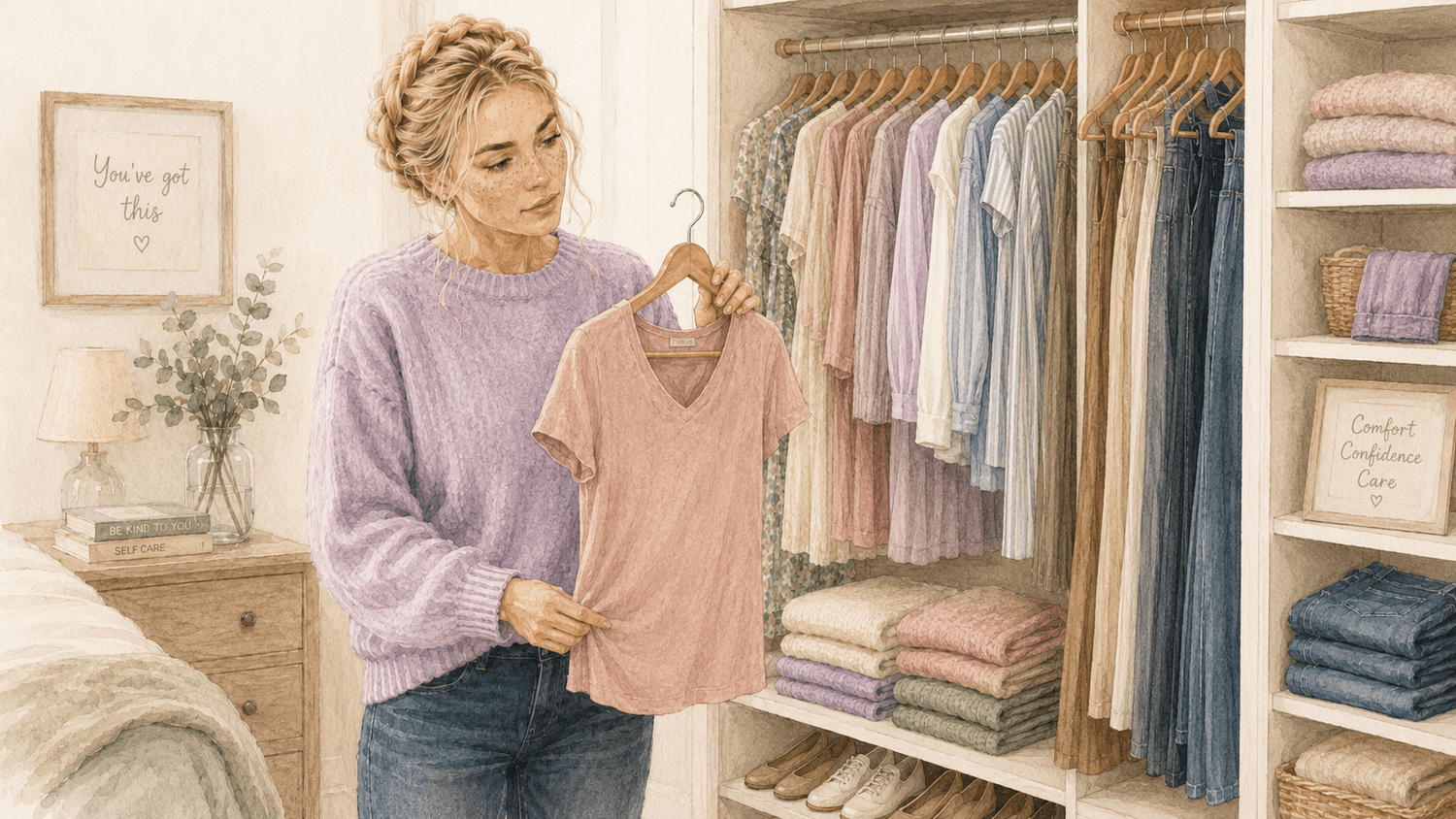
Wear a Two-Piece Outfit If You Can
Start with the basics.
Wear a two-piece outfit if you can. A top with pants or a skirt is usually easier than a dress because you will typically need to undress from the waist up.
It sounds like a small thing, but small things matter when you already feel exposed or unsure.
A two-piece outfit means you can keep your lower half dressed, which may help you feel a little more comfortable while you are changing or waiting.
You don't need to dress perfectly. You just want to make the day easier for yourself.
If you want the full clothing guide before your appointment — including what fabrics work best, what to avoid, and how to think about your bra — this post covers everything: What Should You Wear to a Mammogram?
Follow Your Clinic’s Instructions About Products on Your Skin
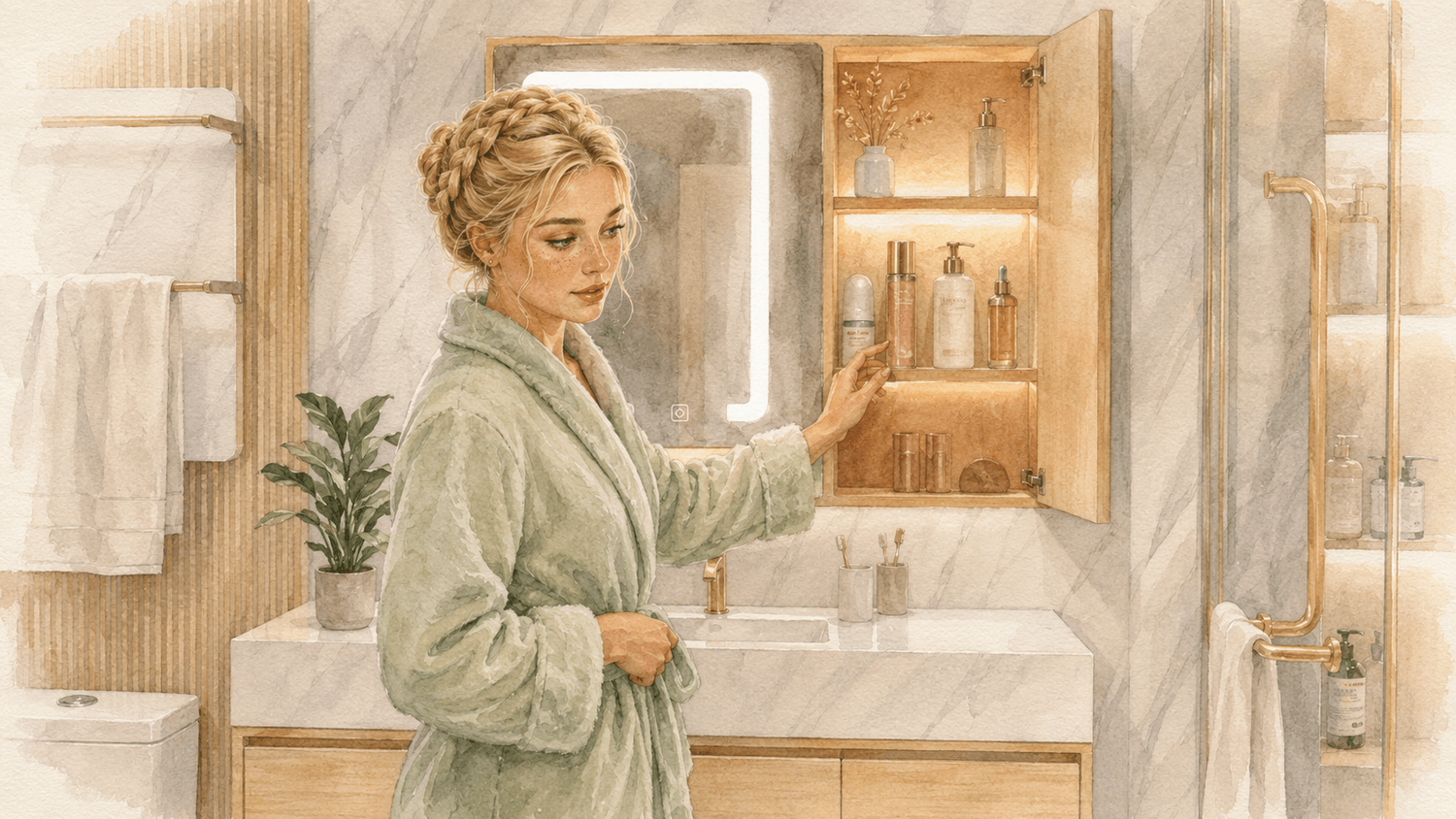
On the day of your mammogram, follow your clinic's instructions about deodorant, antiperspirant, powder, lotion, perfume, or creams under your arms or on the breast area.
Some products can show up on mammogram images and may cause confusion or require repeat imaging.
That doesn't mean you need to panic about every product in your bathroom. It simply means you should read and follow the instructions given to you by your imaging centre.
If you are unsure, call the centre before your appointment and ask what they prefer you to avoid on the day. That is always better than guessing.
If you want to understand exactly why deodorant and other products matter for mammogram images, this post explains it clearly: Can You Wear Deodorant Before a Mammogram?
Think About Timing If You Still Have Periods
If you still have periods and your mammogram is routine, you may want to avoid booking during the week before your period or during your period if your breasts are usually tender or swollen at that time.
This is not always possible and you should never delay imaging that needs urgent attention. But when you have flexibility, timing can help with comfort.
Many women find their breasts feel less tender in the week after their period. If that is true for you, it may be worth keeping in mind when booking a routine appointment.
If your healthcare provider has asked you to go because of a specific concern, follow their guidance rather than waiting for a better time.
Bring What Your Imaging Centre Asked For
Bring what your imaging centre asked you to bring.
That may include referral forms, medical aid or insurance details, previous mammogram images if you have them, or information about breast surgery, implants, family history, symptoms, or hormone use.
Every centre works slightly differently, so use their instructions as your main guide.
If you have had previous breast imaging somewhere else, ask whether you need to bring those images or reports with you.
Previous images can sometimes help the radiologist compare what is new, what is stable, and what has been seen before.
Know What Information You May Be Asked
Before your mammogram, you may be asked questions about your breast history and general health.
This may include whether you have breast symptoms, whether you have had breast surgery or implants, whether you are pregnant or breastfeeding, and whether breast cancer runs in your family. You may also be asked about hormone use or previous imaging.
These questions are not there to embarrass you or make the appointment feel more intense.
They help the team understand your situation and make sure the right information goes with your images.
Prepare Emotionally Too
Please don't only prepare the practical things. Prepare emotionally too.
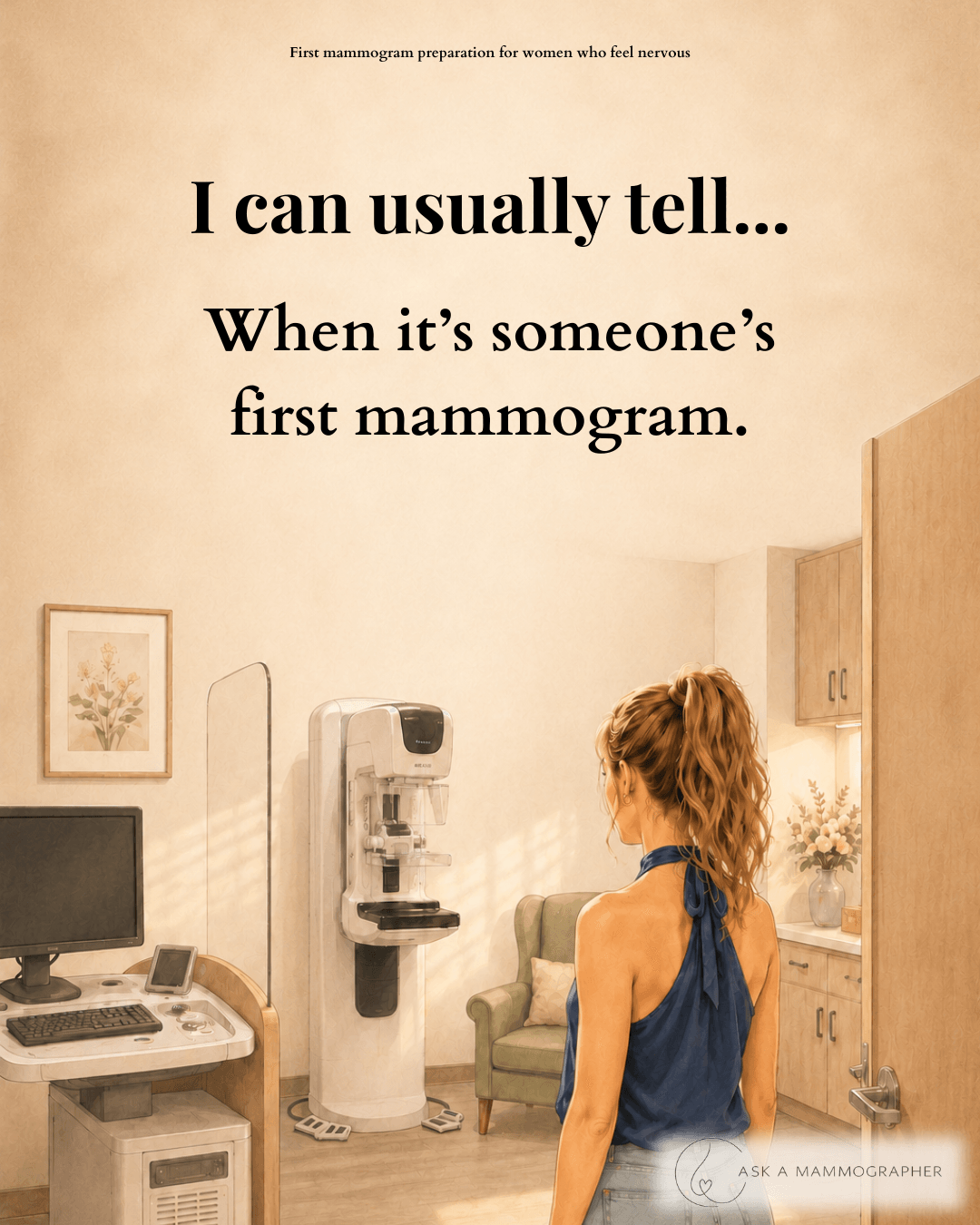
Because for many women, the hardest part is not the outfit, the deodorant instructions, or the paperwork. It's not knowing what the room looks like, how positioning works, how compression will feel, or what happens after.
You don't need to memorise everything before you arrive. Your mammographer will guide you.
But it helps to know that you can ask questions, say when something feels too much, and let the staff know it is your first time.
What You Can Say to Your Mammographer
You are allowed to say, "This is my first mammogram."
You are allowed to say, "I am nervous."
You are allowed to ask, "Can you explain what you are doing before you do it?"
You are allowed to ask, "How long will the pressure last?"
You don't need to pretend you are fine if you are not.
Your mammographer cannot remove every uncomfortable part of the exam, but she can guide you through it with more awareness if she knows how you are feeling.
Preparation Isn’t About Controlling Every Detail
Preparation isn't about controlling every detail. It's about removing unnecessary surprises.
You don't need to know every technical part of the mammogram before you arrive. You don't need to become an expert in breast imaging. You don't need to read every scary story on the internet to feel ready.
You need enough context to walk in less blind.
That is the difference between calm preparation and overthinking.
A Calm Next Step Before Your Appointment
This post gives you the practical basics of how to prepare for a mammogram. But the most useful thing you can do right now is have everything organised in one place before the day arrives.
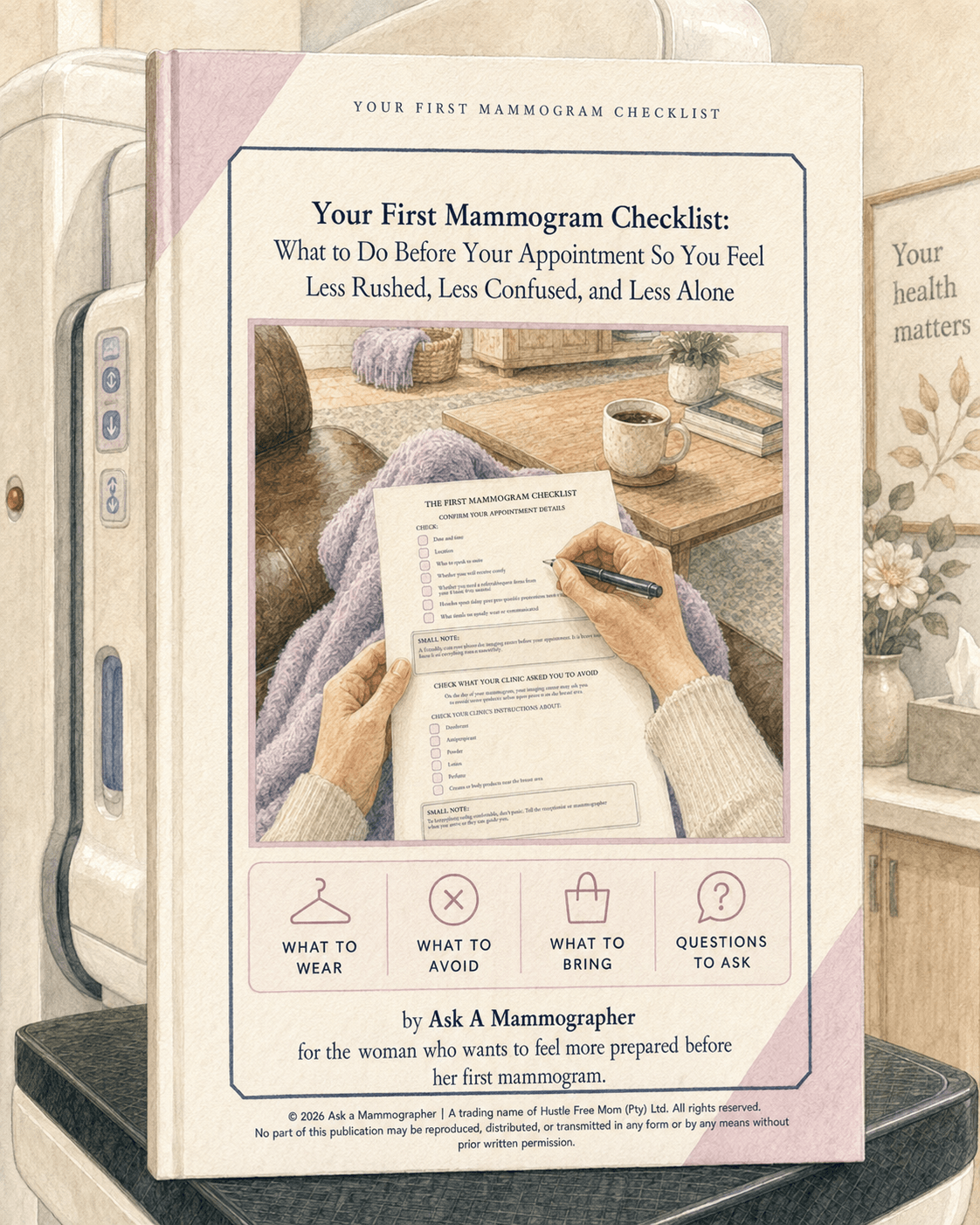
The First Mammogram Checklist covers what to wear, what to avoid, what to bring, and what you are allowed to ask — from a mammographer's perspective, in one calm document.
It is free and it takes less than five minutes to read.
If your first mammogram is coming up and you want to feel a little more organised before you walk in, grab the free checklist here: Get the Free First Mammogram Checklist
Written by: Ask a Mammographer
This article is for general educational purposes only and is not a substitute for medical advice, diagnosis, or treatment. Always follow the guidance of your doctor, radiologist, mammographer, or healthcare provider, especially if you have symptoms, personal risk factors, or specific instructions for your appointment
Disclaimer
This guide has been created to support and prepare you for your mammogram experience. It is based on professional knowledge and real-world practice. It is not a substitute for medical advice, diagnosis, or treatment. Always follow the advice of your doctor, radiologist, or healthcare provider. Individual experiences may vary.
Follow me on Instagram

Grab Your Free First Mammogram Checklist
Have a question?
The content on this website is for general educational purposes only and does not replace medical advice, diagnosis, or treatment. Always follow the guidance of your doctor, radiologist, mammographer, or healthcare provider.
© 2026 Ask a Mammographer | A trading name of Hustle Free Mom (Pty) Ltd. All rights reserved.
Have a Question?
Follow me on Instagram
for Breast Related Information
The content on this website is for general educational purposes only and does not replace medical advice, diagnosis, or treatment. Always follow the guidance of your doctor, radiologist, mammographer, or healthcare provider.
© 2026 Ask a Mammographer | A trading name of Hustle Free Mom (Pty) Ltd. All rights reserved.