
What to Expect at Your First Mammogram: A Calm Overview Before You Go
If Your First Mammogram Feels Big And Scary, You’re Not Being Dramatic
If your first mammogram is coming up and your stomach drops every time you think about it, can I say this clearly?
You're not being dramatic at all. It IS a big deal, no matter how many "Just do it!" pieces of advice you get from family and friends.
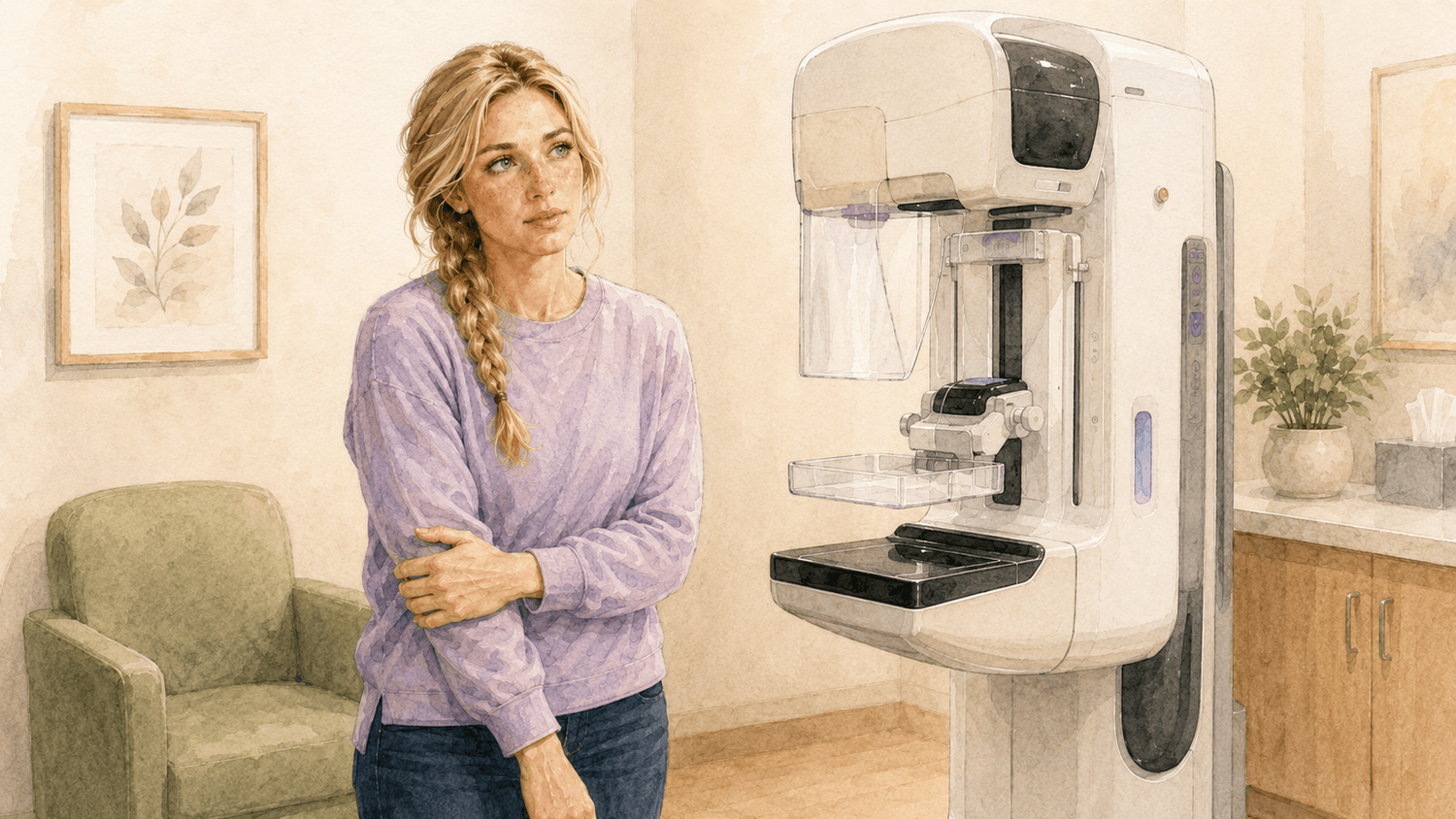
A first mammogram can feel like a lot because you're walking into something unfamiliar. A medical room you haven't been in before. A machine you may have only seen in pictures. A test you know matters and could potentially change your life, but don't fully understand yet.
And then the internet does what the internet does. It gives you too much information, too fast, with very little context.
So let's slow it down.
What Is a Mammogram?
A mammogram is an X-ray examination of the breast.
It is commonly used as a screening test to look for early changes in your breast tissue before any symptoms are felt. It is also used when there's a specific concern, like a lump, nipple discharge, breast pain, or another breast change that needs closer investigation.
That difference matters, because not every mammogram appointment is for the same reason. Even though the actual mechanics, experience, and procedure stay largely the same.
Some women are going because they have reached the recommended screening age. Some are going because their doctor wants to check something specific. Some are going because of personal risk factors or family history.
Your GP or breast clinic should be able to guide you on why you're being sent and what type of appointment you're having. It is important that you ask, because not knowing will drive unnecessary fear and stress.
What Usually Happens When You Arrive?
At a basic level, your appointment will include checking in at reception, confirming your details, and answering some health or breast history questions — either asked by the mammographer directly or given to you on a questionnaire by the receptionist.
You may be asked about previous breast imaging, breast surgery, implants, symptoms, pregnancy, breastfeeding, family history, or where you are in your menstrual cycle.
These questions are not there to make the appointment more stressful. They help the imaging team understand your situation and make sure the correct information goes with your images.
After that, you will usually be asked to get undressed from the waist up. Many centres provide a gown or cape so you can stay covered while you wait to be taken into the mammogram room.
Most women feel some resistance to that part — and your mammographer expects it and is completely prepared for it.
What Happens in the Mammogram Room?
Once you are in the mammogram room, your mammographer will guide you to the machine.
You do not need to know where to stand. You do not need to know how to position your body. You do not need to walk in already understanding the machine.
That is your mammographer's job. She is qualified and highly specialised — trust that.
She will help position your breast on the designated area of the machine and guide your body into the correct position. You may be asked to turn slightly, relax your shoulder, move your chin, place your arm somewhere specific, or hold still for a few seconds.
This can feel awkward, especially the first time. Awkward does not mean you are doing something wrong.
Why Is Compression Used During a Mammogram?
Your breast will be compressed for a short time while each image is taken.
And yes — that word, compressed, is usually where women tense up. Compression is part of the exam because it helps spread the breast tissue so the image can be clearer. It also helps reduce movement while the image is being taken.
It may feel uncomfortable, tight, strange, or awkward. For many women, the anticipation feels worse than the actual few moments of pressure. That does not mean every woman experiences it the same way, but the compression itself is brief.
If something feels too painful or you feel overwhelmed, tell your mammographer. You are allowed to speak.
If you want to understand more about what compression actually feels like and why your body may react the way it does, this post explains it in more detail: Does a Mammogram Hurt? What It May Feel Like and Why Compression Is Used
Will You Be Told What the Images Show?
In most cases, your mammographer takes the images, checks that they are technically suitable, and then the images are reviewed according to the process used by that imaging centre.
Your mammographer may not be allowed to tell you what the images show.
That can feel frustrating if you are anxious and hoping for instant reassurance, but it is important to understand the difference between taking the images and giving a medical result. That boundary exists to protect the accuracy of your results. It is worth understanding before you leave the room wondering.
Your results may be sent to your referring doctor, communicated by the imaging centre, or provided according to your local healthcare process.
Before you leave, you can ask how and when you should expect your results.
That is a completely fair question.
What Happens After the Images Are Taken?
After the images are complete, you will usually get dressed and leave.
Some women feel relieved immediately. Some still feel nervous until they receive their results. Some replay the appointment in their head and wonder if the mammographer saw something concerning.
That reaction is common when you don't fully understand the process.
A mammogram appointment can feel emotionally bigger than the few minutes it takes in the room.
That does not mean you handled it badly.
It means it mattered to you.
In some cases, women are asked to return for additional images or a follow-up appointment. If that happens to you, it does not automatically mean something is wrong. You can read more about what a callback usually means and why it happens here: What Does It Mean If You Get Called Back After a Mammogram?

What Should You Say If You Are Nervous?
The part I really want you to know is this.
You are allowed to ask questions.
You are allowed to say, "This is my first mammogram."
You are allowed to say, "I'm nervous."
You are allowed to ask your mammographer to explain what is happening before she does it.
You don't have to pretend you're calm if you're not. Your mammographer has likely helped many nervous women through the same room, the same machine, and the same unknowns. She is not surprised by your nerves. She is used to them. And she would rather know.
This isn't about becoming fearless.
It's about understanding enough so the room doesn't feel completely unfamiliar.
A Calm First Step Before You Go
This blog gives you a calm overview of what to expect at your first mammogram, but there is one practical thing you can do right now that will make the day feel less scattered.
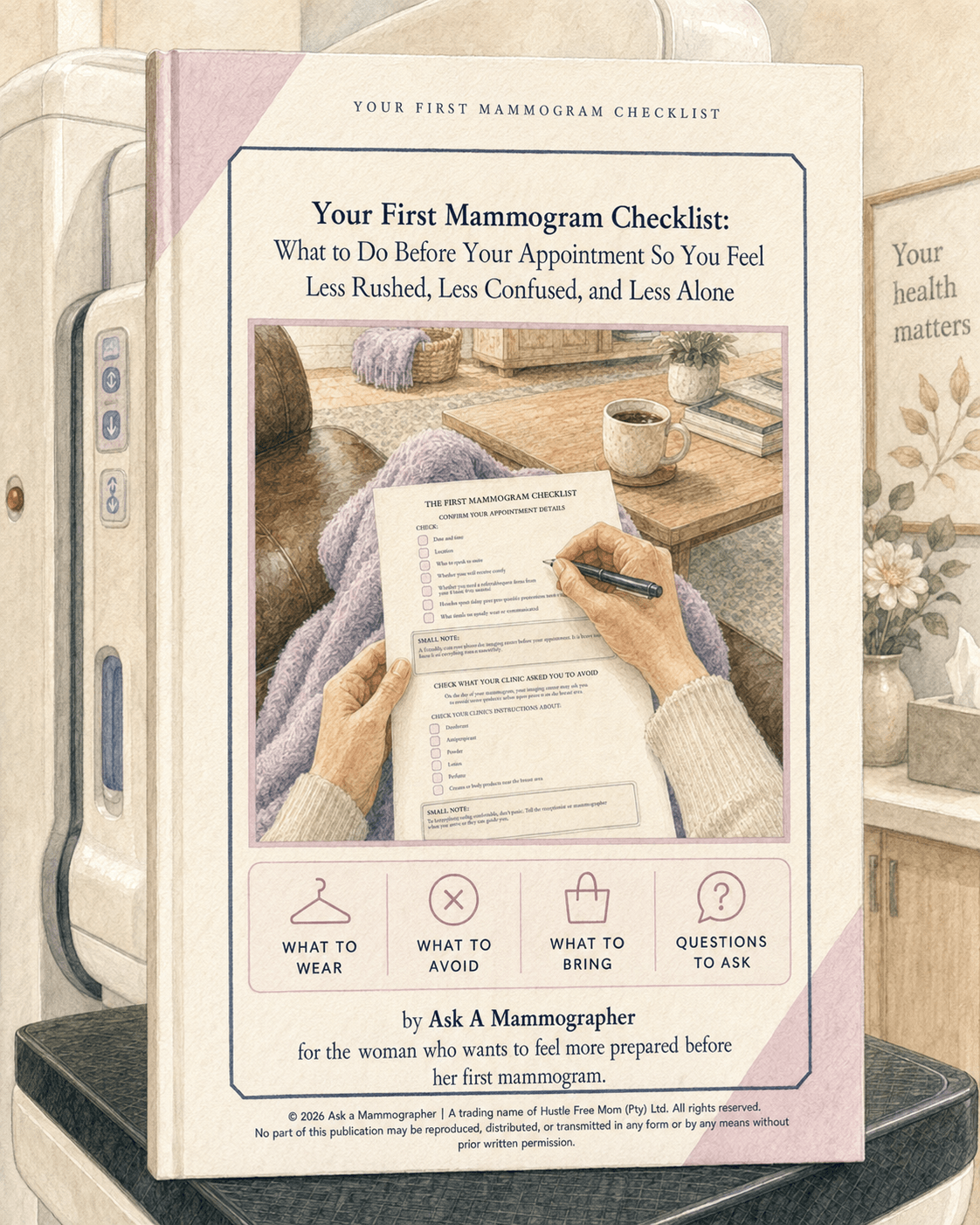
The First Mammogram Checklist covers what to wear, what to avoid, what to bring, and what you are allowed to ask — from a mammographer's perspective, in one place.
It is free, and it takes less than five minutes to read.
If your first mammogram is coming up and you want to feel a little more organised before you walk in, grab the free checklist here: Get the Free First Mammogram Checklist
Written by: Ask a Mammographer
This article is for general educational purposes only and is not a substitute for medical advice, diagnosis, or treatment. Always follow the guidance of your doctor, radiologist, mammographer, or healthcare provider, especially if you have symptoms, personal risk factors, or specific instructions for your appointment


Disclaimer
This guide has been created to support and prepare you for your mammogram experience. It is based on professional knowledge and real-world practice. It is not a substitute for medical advice, diagnosis, or treatment. Always follow the advice of your doctor, radiologist, or healthcare provider. Individual experiences may vary.
Follow me on Instagram

Grab Your Free First Mammogram Checklist
Have a question?
The content on this website is for general educational purposes only and does not replace medical advice, diagnosis, or treatment. Always follow the guidance of your doctor, radiologist, mammographer, or healthcare provider.
© 2026 Ask a Mammographer | A trading name of Hustle Free Mom (Pty) Ltd. All rights reserved.
Have a Question?
Follow me on Instagram
for Breast Related Information

The content on this website is for general educational purposes only and does not replace medical advice, diagnosis, or treatment. Always follow the guidance of your doctor, radiologist, mammographer, or healthcare provider.
© 2026 Ask a Mammographer | A trading name of Hustle Free Mom (Pty) Ltd. All rights reserved.