
What Does It Mean If You Get Called Back After a Mammogram?
A Mammogram Callback Can Make Your Stomach Drop
Getting called back after a mammogram can make your stomach drop.
I know.
The first thought many women have is: "They found cancer."
But a callback does not automatically mean that.
A callback usually means the radiologist wants more information. That may involve additional mammogram images, special views, spot compression, ultrasound, or comparison with previous images.
That does not make the waiting easy. But it does mean the story is not automatically what your fear says it is.
What Is a Mammogram Callback?
A mammogram callback means you are being asked to return for additional imaging or further evaluation after your mammogram.
It does not automatically mean you have cancer.
It usually means the radiologist needs a clearer look, more detail, or additional information before making a final assessment.
That may include extra mammogram views, ultrasound, or comparison with previous mammogram images if they are available.
A helpful way to think about it is this:
A callback is not the final answer. It is a request for a clearer look.
Why Might You Be Called Back After a Mammogram?
There are many reasons someone may be called back after a mammogram.
Sometimes the image is not clear enough. Sometimes breast tissue overlaps in a way that needs another view. Sometimes there are calcifications, a mass, an asymmetry, or an area that simply needs closer evaluation.
Those words can sound frightening when you read them quickly.
But they are imaging words, not automatic conclusions.
The radiologist may need more information to understand what they are seeing properly. That is the purpose of the callback.
Why Callbacks Can Be More Common After a First Mammogram
Callbacks can be more common after a first mammogram because there are no previous images to compare with.
When the radiologist has older images, they can compare what is normal for your breast tissue pattern over time.
Without that comparison, they may prefer to take a closer look at anything that is not entirely clear.
That can feel alarming, especially if nobody explained it to you beforehand.
But sometimes the issue is not that something terrible has been found. Sometimes the issue is simply that the radiologist needs a baseline and more clarity before making a final assessment.
Understanding the Difference Between a Screening and Diagnostic Appointment
It also helps to understand the difference between the types of mammogram appointments you may be referred for.
A screening mammogram is routine. A diagnostic mammogram is done when a specific concern or area needs a closer look — which is exactly what a callback appointment involves.
Understanding that distinction can help the whole process feel less frightening, because you know why the follow-up is happening and what it is designed to do.
You can read more about the difference here: Screening vs Diagnostic Mammogram: What Is the Difference?

Why Fear Moves So Fast After a Callback
This is where fear moves very fast.
Your mind hears "come back" and starts writing the worst possible ending.
You may start replaying the appointment. You may wonder if the mammographer saw something. You may start searching online and find stories that make you feel worse.
That reaction is understandable. A callback touches one of the hardest parts of medical imaging: waiting without certainty.
But in many cases, a callback is part of careful imaging, not a diagnosis.
Please Do Not Ignore the Callback
A callback does not automatically mean cancer.
But that does not mean you should ignore it.
Please do not ignore it.
You should attend the follow-up imaging your healthcare provider or imaging centre recommends. The goal is to get clarity.
Avoiding the callback may give you temporary emotional relief, but it does not give you answers. And when your health team asks for follow-up imaging, the safest next step is to complete that follow-up.
What Might Happen at the Callback Appointment?
At the callback appointment, the imaging team may take additional mammogram images.
These may include different angles, special views, spot compression, or magnified images, depending on what the radiologist needs to see more clearly.
You may also have an ultrasound, depending on the reason for the callback and the facility's process.
Sometimes the radiologist may review the images while you are still there. Sometimes your results may be sent to your referring doctor or communicated later according to the centre's usual process.
Every facility works a little differently, so it is completely reasonable to ask what you should expect before you arrive.
Questions You Can Ask After a Mammogram Callback
When you receive a callback, you can ask:
"What additional imaging is being requested?"
"Is this for more mammogram views, ultrasound, or both?"
"When will the radiologist review it?"
"How and when will I get my results?"
"Do I need to bring previous mammogram images or reports?"
These questions are not dramatic. They are practical. You are allowed to understand the next step before you arrive.
Try Not to Let Panic Write the Ending
You are allowed to feel anxious. Of course you are.
But try not to let panic convince you that the story is already over before the next step has even happened.
A callback means more information is needed. It does not automatically tell you what the final result will be.
The best thing you can do is attend the follow-up, ask clear questions, and let the process give you the information your fear is trying to invent.
If you want to understand what the full mammogram experience looks like from beginning to end — including what happens after the images are taken and why the process works the way it does — this post gives you the calm overview: What to Expect at Your First Mammogram

A Calm First Step Before Your Appointment
Whether you are going for your first mammogram or returning for a callback, the practical preparation is the same.
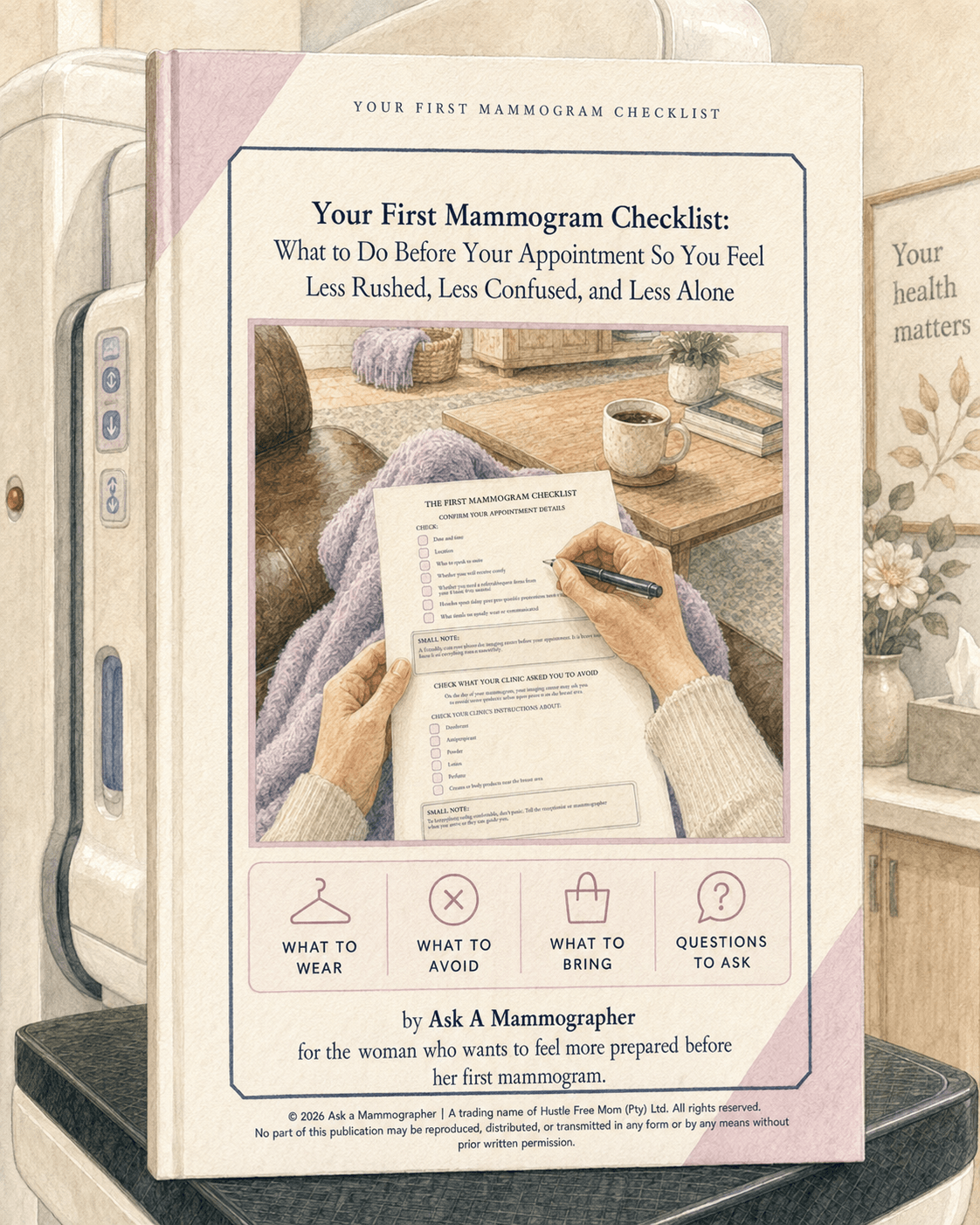
The First Mammogram Checklist covers what to wear, what to avoid, what to bring, and what you are allowed to ask — from a mammographer's perspective, in one calm document.
It is free and takes less than five minutes to read.
Grab the free checklist here: Get the Free First Mammogram Checklist
Written by: Ask a Mammographer
This article is for general educational purposes only and is not a substitute for medical advice, diagnosis, or treatment. Always follow the guidance of your doctor, radiologist, mammographer, or healthcare provider, especially if you have symptoms, personal risk factors, or specific instructions for your appointment


Disclaimer
This guide has been created to support and prepare you for your mammogram experience. It is based on professional knowledge and real-world practice. It is not a substitute for medical advice, diagnosis, or treatment. Always follow the advice of your doctor, radiologist, or healthcare provider. Individual experiences may vary.
Follow me on Instagram

Grab Your Free First Mammogram Checklist
Have a question?
The content on this website is for general educational purposes only and does not replace medical advice, diagnosis, or treatment. Always follow the guidance of your doctor, radiologist, mammographer, or healthcare provider.
© 2026 Ask a Mammographer | A trading name of Hustle Free Mom (Pty) Ltd. All rights reserved.
Have a Question?
Follow me on Instagram
for Breast Related Information

The content on this website is for general educational purposes only and does not replace medical advice, diagnosis, or treatment. Always follow the guidance of your doctor, radiologist, mammographer, or healthcare provider.
© 2026 Ask a Mammographer | A trading name of Hustle Free Mom (Pty) Ltd. All rights reserved.