
Does a Mammogram Hurt? What It May Feel Like and Why Compression Is Used
If You're Wondering Whether a Mammogram Hurts, You're Not Alone
One of the first questions women ask before a mammogram is very simple: "Is it going to hurt?"
And honestly? That question makes complete sense. Because most women don't hear a proper explanation first. They hear the scary version.
"They squash you."
"It hurts so much."
"Just you wait and see."
Helpful, right? Not really.
So let's answer the question properly, without pretending every woman's experience is exactly the same.
Does a Mammogram Hurt?
The honest answer is: it depends.
Some women describe a mammogram as firm pressure. Some find it uncomfortable but manageable. Some find it painful, especially if their breasts are tender, they're close to their period, they have sensitive breast tissue, or they're already very tense before the exam starts.
That doesn't mean you're weak. It means bodies respond differently, just like everything else in life.
A mammogram isn't usually described as relaxing or comfortable, but for many women the pressure is brief. Often, the fear builds up for much longer than the actual compression lasts.
What Does Mammogram Compression Feel Like?
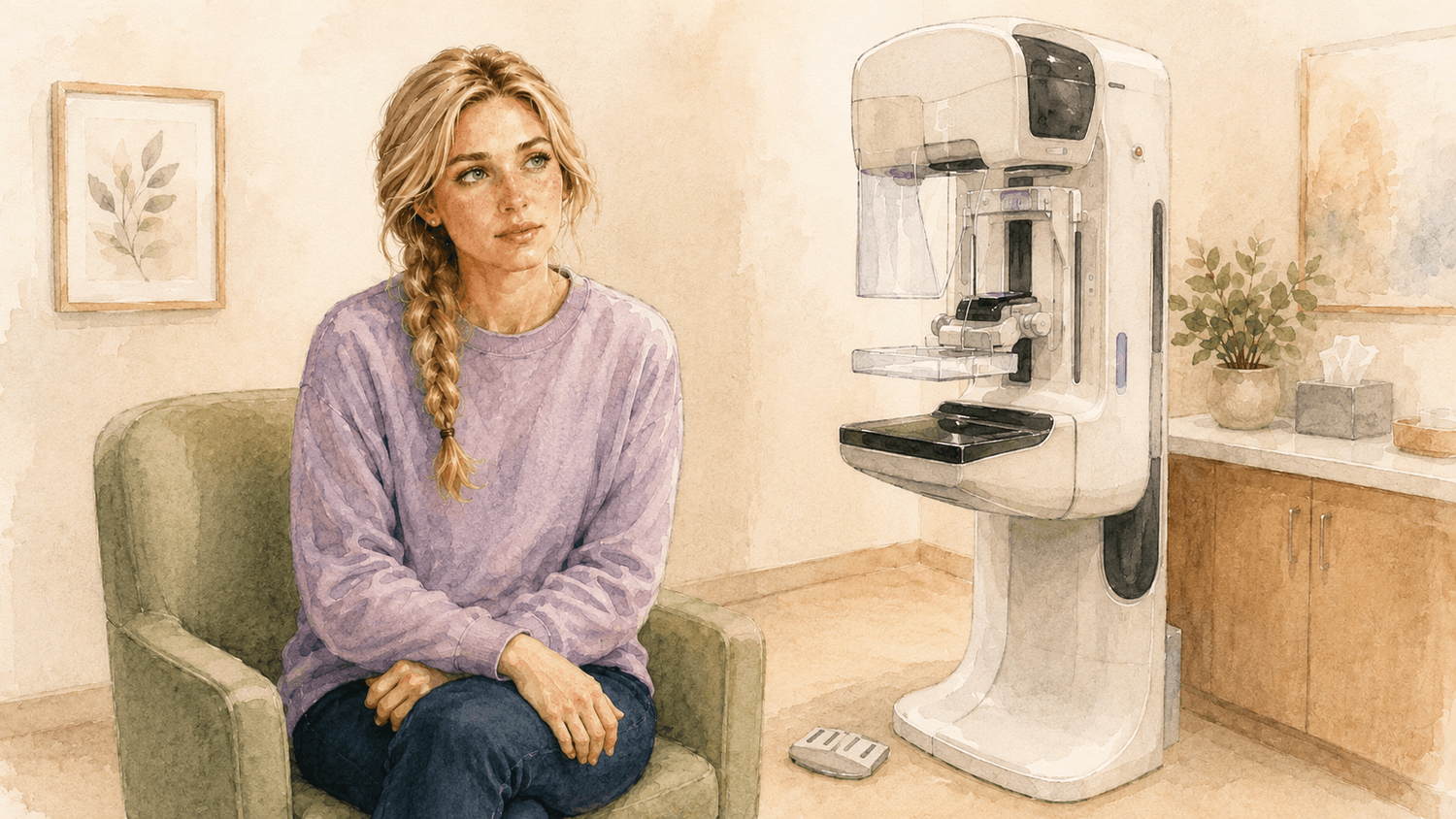
During a mammogram, the breast is gently but firmly compressed between the imaging plate and the compression paddle.
This may feel tight, heavy, awkward, or uncomfortable. Some women feel pressure more than pain. Others may feel sharp tenderness, especially if their breasts are already sensitive.
The pressure is usually held for a short time while each image is taken.
It is not meant to be held forever, even though I know it can feel longer when you are anxious.
Your mammographer will position you, apply the compression, take the image, and the machine releases the pressure automatically once that image is complete.
Why Is Compression Used During a Mammogram?
Here is the part that often gets missed.
Compression is not done to punish you. It has a purpose.
Compression helps spread the breast tissue out so the image can be clearer. It also helps reduce movement, which matters because the radiologist needs images that are as useful as possible.
When breast tissue is spread out more evenly, it can be easier to spot areas of concern. That does not magically make compression comfortable, but it does make it less random.
When you understand why something is happening, it stops feeling like something is being done to you. That shift alone can change how your body responds to the pressure.
Why Being Nervous Can Make It Feel Worse
Your body also plays a role.
When you are nervous, your shoulders lift. Your chest tightens. Your breathing becomes shallow. Your muscles brace before the exam has even started.
That is not weakness. That is your body trying to protect you from something unfamiliar.
But that tension can make positioning feel more awkward and pressure feel more intense. If your body is braced, it may be harder for your mammographer to position you comfortably and efficiently.
This is one reason it helps to tell your mammographer you are nervous before the exam begins.
She cannot take all the pressure away, but she can guide you through it more calmly when she knows how you are feeling.
When Might a Mammogram Feel More Tender?
Some women naturally have more breast tenderness than others.
If you still have a menstrual cycle, your breasts may feel more sensitive at certain times of the month. For many women, the week before their period can feel more tender than the week after.
If your appointment is routine rather than urgent, you may prefer to schedule it when your breasts are usually less tender.
That said, never delay an appointment your healthcare provider has asked you to attend urgently or because of a specific concern. If you are unsure about timing, ask your imaging centre when you book.
What Can Help You Feel More Prepared?
A few simple things may help make the appointment feel less overwhelming.
Follow your imaging centre's instructions about deodorant, powder, perfume, lotion, or creams on the day of the exam. Certain products can show up on mammogram images and cause confusion when the images are reviewed. Always follow the guidance your centre gives you specifically.
Wear a two-piece outfit so you only need to undress from the waist up. Small practical decisions matter when your brain is already loud.
If you want to understand exactly what to wear and what to avoid before your appointment, this post covers all of it: What Should You Wear to a Mammogram?

And please — tell your mammographer if you are nervous.
You don't get extra points for pretending you're fine. You can say, "This is my first mammogram and I'm anxious." You can ask, "Can you talk me through what you are doing?" You can ask, "How long will the pressure last?"
You are allowed to be involved in the experience.
A Mammogram May Be Uncomfortable, But It Shouldn’t Feel Unknown
A mammogram may be uncomfortable. It may feel awkward. It may not be your favourite few minutes.
But understanding why compression happens can make it feel less random, less threatening, and less like something is being done to you without explanation.
You don't have to walk in fearlessly.
But you can walk in with a clearer idea of what may happen and why.
One More Thing Worth Knowing
If you want the full picture of what happens before, during, and after the appointment — not just the compression part — this post walks you through the whole experience calmly from start to finish: What to Expect at Your First Mammogram
A Calm Next Step Before Your Appointment
This post explains compression and what a mammogram may feel like, but there is one practical thing you can do right now before your appointment.
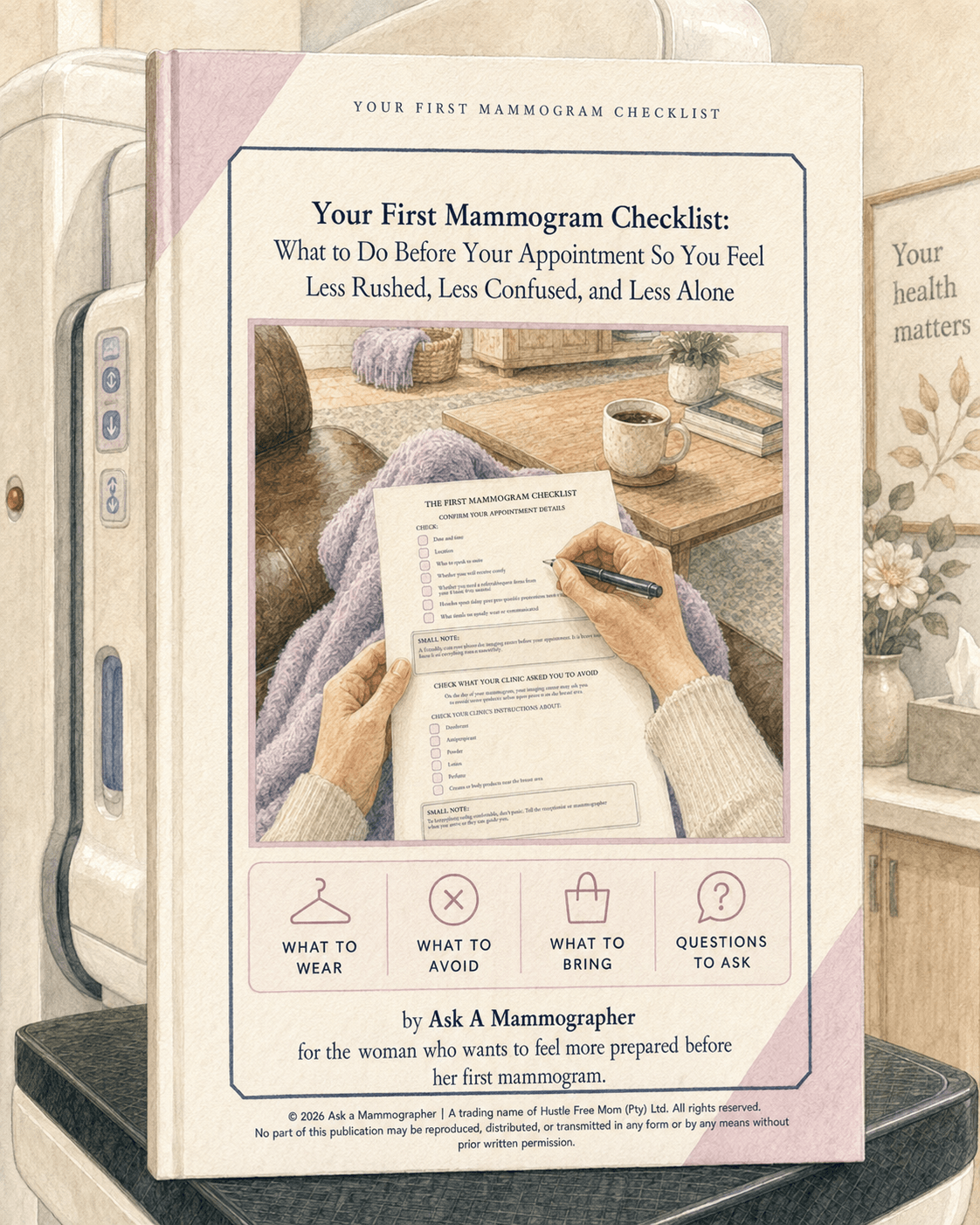
The First Mammogram Checklist covers what to wear, what to avoid, what to bring, and what you are allowed to ask — from a mammographer's perspective, in one place.
It is free and it takes less than five minutes to read.
If your first mammogram is coming up and you want to feel a little more organised before you walk in, grab the free checklist here: Get the Free First Mammogram Checklist
Written by: Ask a Mammographer
This article is for general educational purposes only and is not a substitute for medical advice, diagnosis, or treatment. Always follow the guidance of your doctor, radiologist, mammographer, or healthcare provider, especially if you have symptoms, personal risk factors, or specific instructions for your appointment


Disclaimer
This guide has been created to support and prepare you for your mammogram experience. It is based on professional knowledge and real-world practice. It is not a substitute for medical advice, diagnosis, or treatment. Always follow the advice of your doctor, radiologist, or healthcare provider. Individual experiences may vary.
Follow me on Instagram

Grab Your Free First Mammogram Checklist
Have a question?
The content on this website is for general educational purposes only and does not replace medical advice, diagnosis, or treatment. Always follow the guidance of your doctor, radiologist, mammographer, or healthcare provider.
© 2026 Ask a Mammographer | A trading name of Hustle Free Mom (Pty) Ltd. All rights reserved.
Have a Question?
Follow me on Instagram
for Breast Related Information

The content on this website is for general educational purposes only and does not replace medical advice, diagnosis, or treatment. Always follow the guidance of your doctor, radiologist, mammographer, or healthcare provider.
© 2026 Ask a Mammographer | A trading name of Hustle Free Mom (Pty) Ltd. All rights reserved.