What Should You Wear to a Mammogram?
What You Wear Can Make the Appointment Feel Easier
What you wear to your mammogram can make the appointment feel a little easier.
Not because clothing changes the medical part. It does not.
But it can change how exposed, rushed, or awkward you feel on the day. And when it is your first mammogram, those small things matter.
You may not be able to control every part of the appointment, but you can make the changing part simpler for yourself.
Wear a Two-Piece Outfit If You Can
The simplest choice is a two-piece outfit. A top with pants or a skirt.
That way, when you change for the exam, you usually only need to undress from the waist up. If you wear a dress, you may need to remove the whole thing, which can feel more exposed and inconvenient than it needs to be.
This is not about dressing perfectly. It is about choosing something that makes the day feel less awkward.
Choose Something Easy to Take Off and Put Back On
Choose something easy to remove and put back on.
This is not the day for complicated straps, tight layers, or an outfit that makes changing feel stressful. A simple top, blouse, T-shirt, or comfortable button-up works well.
You may be asked to wear a gown or cape from the waist up depending on the imaging centre. The easier your clothing is to manage, the less rushed you will feel before and after the exam.
Think About Your Bra
You will usually need to remove your bra for the mammogram.
Choose a bra that is easy to remove and put back on afterwards. If you feel self-conscious or nervous, wearing something familiar and comfortable helps.
You do not need special underwear. You simply want the changing process to be as straightforward as possible.
Keep Jewellery Simple
Avoid jewellery around your chest and neck area unless your imaging centre says otherwise.
Some facilities may ask you to remove necklaces or anything that could interfere with positioning or imaging. If you wear jewellery, choose pieces that are easy to remove. Or simply leave necklaces at home for the appointment.
Avoid Underarm and Breast-Area Products Before the Exam
This is one of the most important practical points for appointment day.
Because deodorant, antiperspirant, powders, lotions, creams, and perfumes may interfere with mammogram images, plan to apply those products after the exam rather than before.
Follow the specific instructions from your imaging centre, as different centres may phrase this slightly differently.
If you want to understand exactly why these products affect mammogram images and what to do if you forget, this post explains it properly: Can You Wear Deodorant Before a Mammogram?
Consider Timing If Your Breasts Are Tender
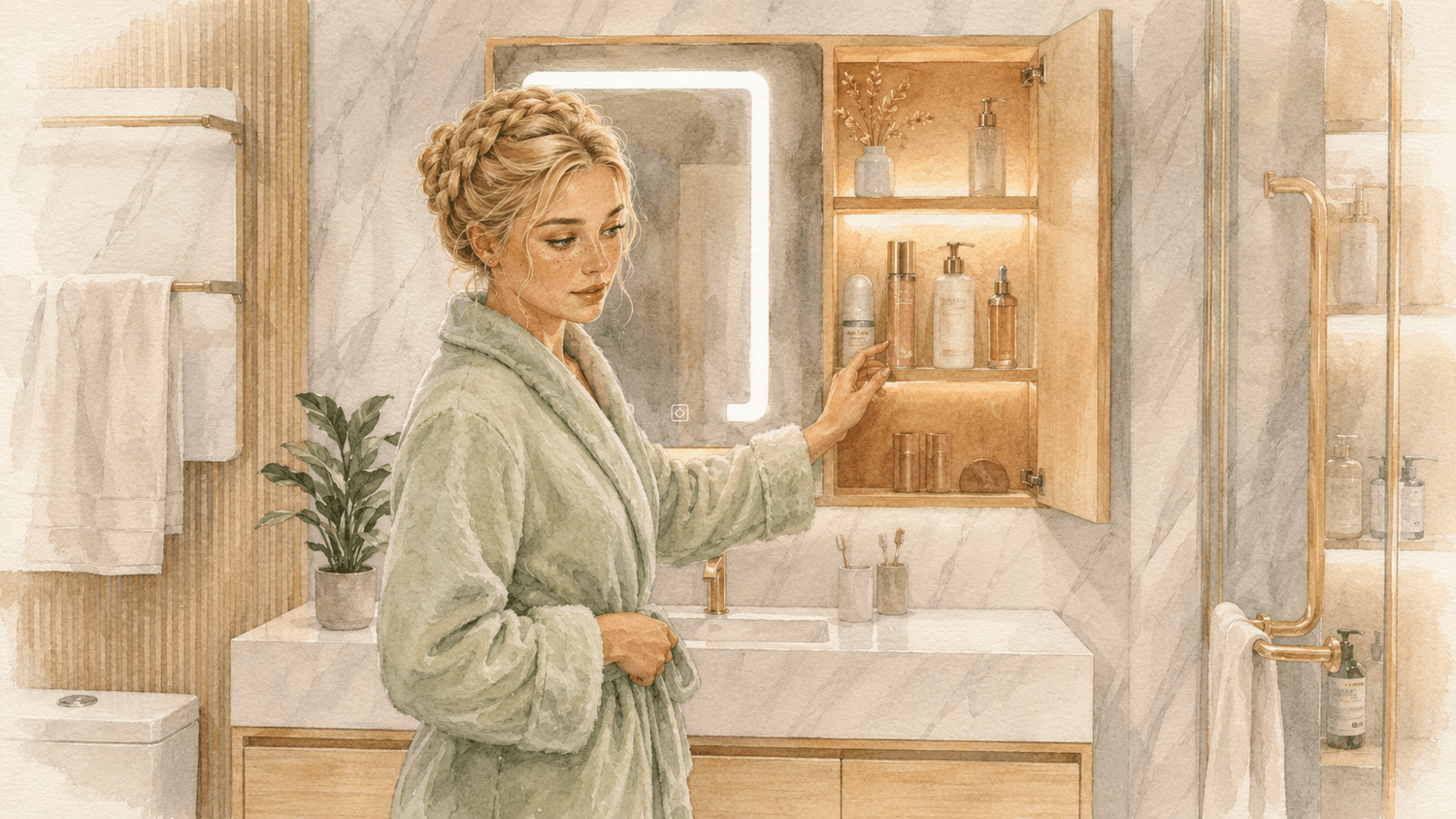
If your breasts are usually tender before your period and your mammogram is routine rather than urgent, you may prefer to schedule it when your breasts are less sensitive. For many women that is in the week after their period.
But please do not delay medically recommended imaging if there is a concern that needs attention. Medical guidance always comes first.
A Simple Clothing Plan for Appointment Day
Simple is best.
Wear a two-piece outfit. Choose an easy top. Keep jewellery minimal. Avoid underarm and breast-area products before the exam. Pack deodorant for afterwards. Wear something that helps you feel comfortable once the exam is finished.
These are not huge decisions. But small decisions can make the appointment feel less awkward.
Clothing Is Only One Part of Feeling Prepared
Knowing what to wear helps. But it does not answer every question you may have before your first mammogram.
If you want to understand how to prepare for the full appointment — not just the clothing — without turning it into a full research project, this post gives you the practical picture: How to Prepare for Your First Mammogram Without Overthinking Everything
A Calm First Step Before Your Appointment
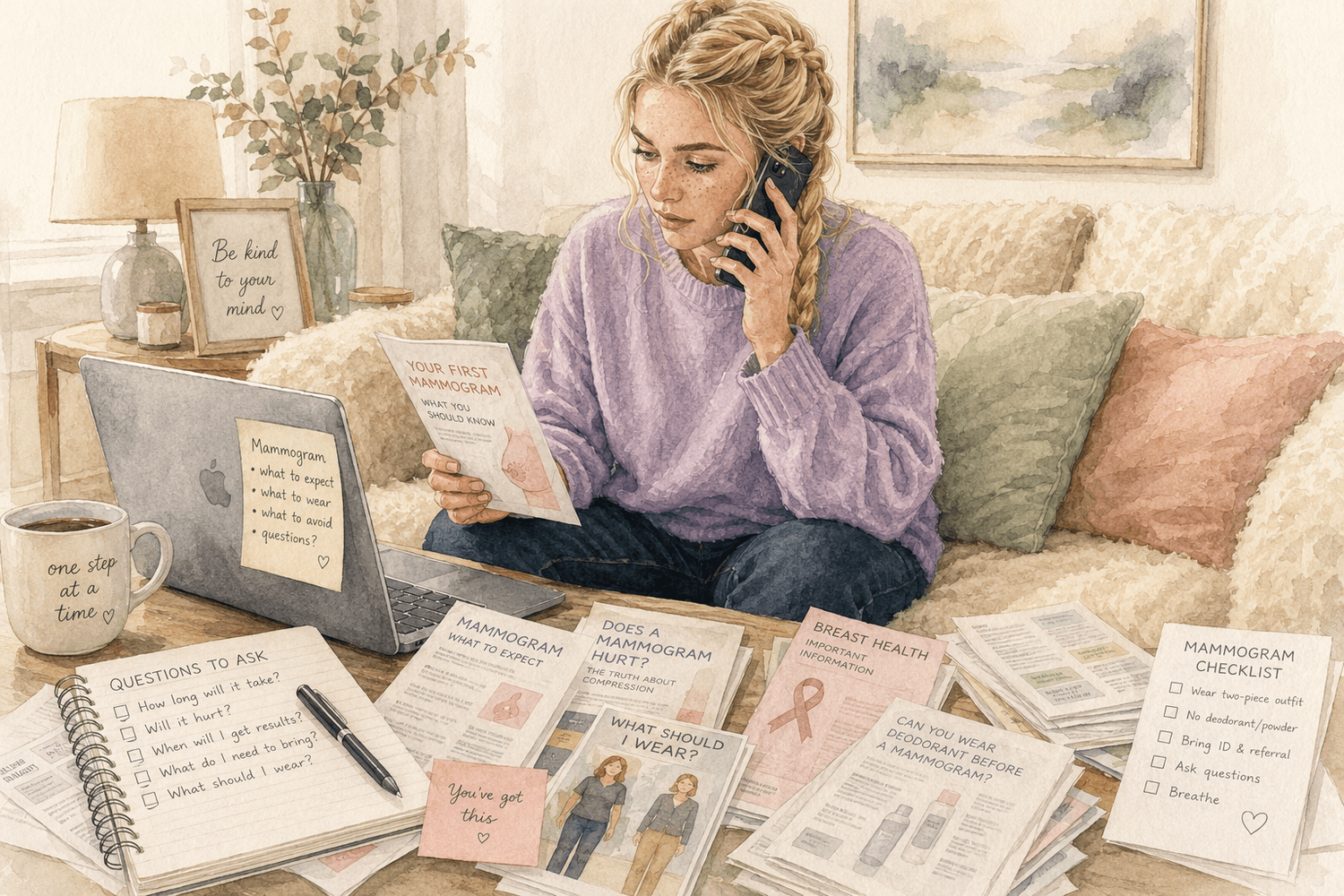
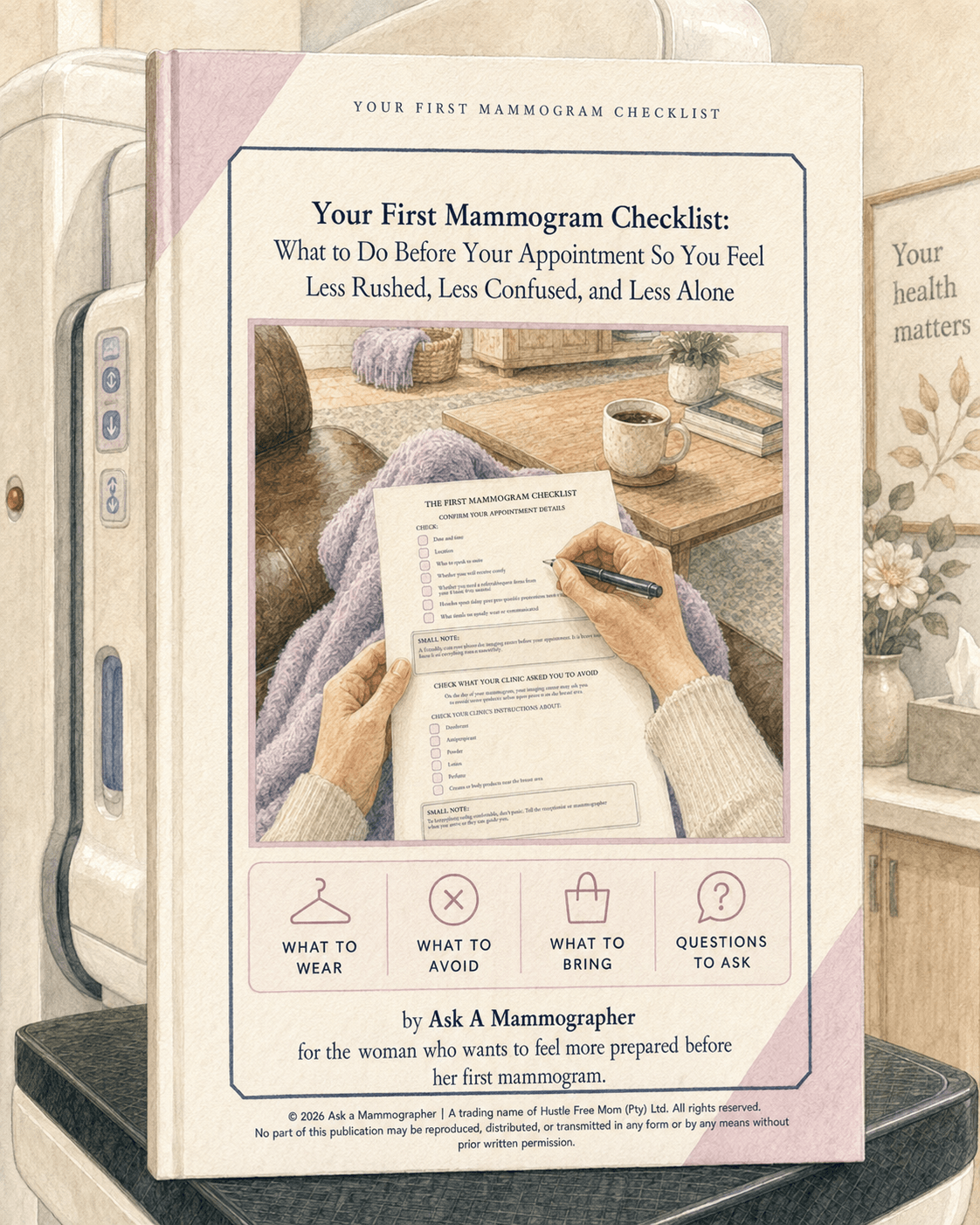
The free checklist puts all of the practical preparation in one place — what to wear, what to avoid, what to bring, and what to ask.
From a mammographer's perspective. Free.
Grab it here: Get the Free First Mammogram Checklist
Written by: Ask a Mammographer
This article is for general educational purposes only and is not a substitute for medical advice, diagnosis, or treatment. Always follow the guidance of your doctor, radiologist, mammographer, or healthcare provider, especially if you have symptoms, personal risk factors, or specific instructions for your appointment
Disclaimer
This guide has been created to support and prepare you for your mammogram experience. It is based on professional knowledge and real-world practice. It is not a substitute for medical advice, diagnosis, or treatment. Always follow the advice of your doctor, radiologist, or healthcare provider. Individual experiences may vary.
Follow me on Instagram

Grab Your Free First Mammogram Checklist
Have a question?
The content on this website is for general educational purposes only and does not replace medical advice, diagnosis, or treatment. Always follow the guidance of your doctor, radiologist, mammographer, or healthcare provider.
© 2026 Ask a Mammographer | A trading name of Hustle Free Mom (Pty) Ltd. All rights reserved.
Have a Question?
Follow me on Instagram
for Breast Related Information
The content on this website is for general educational purposes only and does not replace medical advice, diagnosis, or treatment. Always follow the guidance of your doctor, radiologist, mammographer, or healthcare provider.
© 2026 Ask a Mammographer | A trading name of Hustle Free Mom (Pty) Ltd. All rights reserved.