
Dense Breasts and Mammograms: What It Means in Plain English
Dense Breast Tissue Can Sound Alarming If No One Explains It
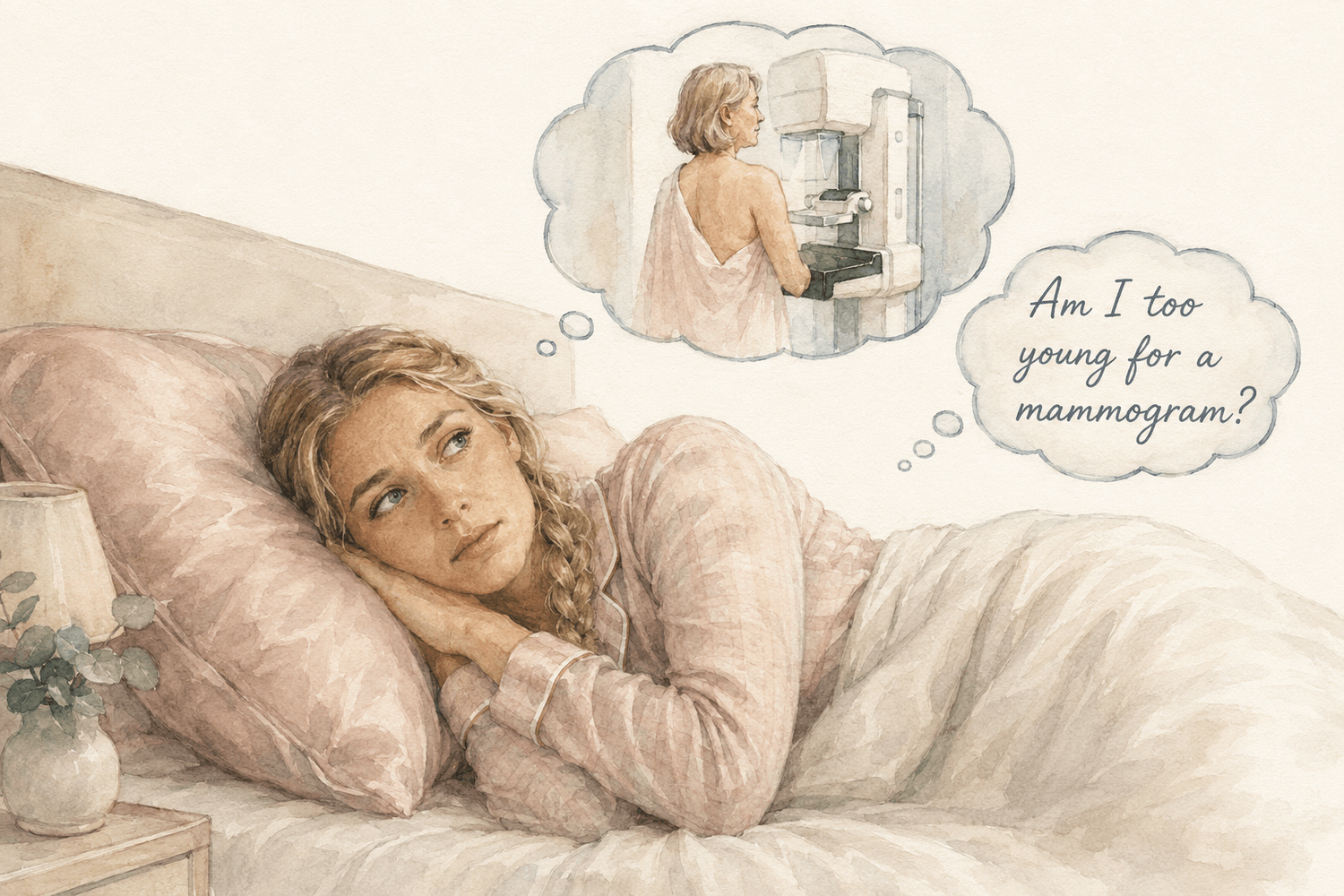
If your mammogram report says you have dense breast tissue, it can sound alarming. Especially if no one explains it properly.
But dense breasts are common.
Breast density is not about how your breasts feel. It is about how the tissue looks on a mammogram.
That difference matters, because many women hear the word dense and assume it means something they should have noticed themselves. It does not.
What Does Dense Breast Tissue Mean?
Dense breasts have more glandular and fibrous tissue compared with fatty tissue.
On a mammogram, dense tissue appears white. Fatty tissue appears darker.
That is why breast density is something seen on imaging, not something you can diagnose by touch. You cannot feel your breast and know whether it is dense. You cannot look in the mirror and know either.
It is a mammogram finding.
Why Dense Breasts Can Make Mammograms Harder to Read
Dense tissue appears white on a mammogram. Some breast changes can also appear white.
So dense tissue can make a mammogram harder to read because the radiologist is looking for white findings within white tissue.
That does not mean a mammogram is useless. It means your breast tissue pattern may make interpretation more challenging.
This is why your healthcare provider may consider your breast density together with your other risk factors when discussing your screening plan.
Does Dense Breast Tissue Mean Something Is Wrong?
Dense breast tissue does not automatically mean something is wrong. It is not a diagnosis by itself. It is one part of your breast health picture.
Many women have dense breasts. The exact wording in reports can vary — scattered areas of density, heterogeneously dense, extremely dense — and it is worth asking your healthcare provider what the specific wording means for you.
What matters is that you understand whether your breast density affects your screening plan or whether your healthcare provider recommends any additional steps.
Could You Need Additional Imaging?
Some women with dense breasts may be advised to have additional imaging such as ultrasound or MRI.
That depends on the person, the healthcare system, the type of density, personal risk factors, family history, symptoms, and local medical guidance.
Additional imaging is not automatically needed for every woman with dense breasts. But it may be part of the discussion for some women.
If you are sent for follow-up imaging after being told you have dense breasts, it can feel alarming. Understanding what follow-up imaging is usually for can help. This post explains what callbacks and additional imaging usually mean: What Does It Mean If You Get Called Back After a Mammogram?

What Dense Breast Tissue Does Not Mean
Dense breast tissue is not something you caused. It is not something you can fix with lifestyle changes before your next mammogram. It is not something you can diagnose by touch. It is not automatically a sign of cancer.
And it does not mean your mammogram had no value.
It means your breast tissue has a pattern that may affect how images are interpreted and whether your healthcare provider wants to consider any additional screening options.
That is very different from panic.
Questions to Ask Your Doctor About Dense Breasts
If you are told you have dense breasts, ask better questions rather than searching for answers online.
You can ask your doctor:
"Does my density change my screening plan?"
"Do I need additional imaging such as ultrasound or MRI?"
"How does my family history affect this?"
"What should I watch for between screenings?"
These questions help move you from fear into context. And if you are wondering when and how often you should be screened given your density, this post covers that conversation: When Should You Start Getting Mammograms?
The Next Step Is a Proper Conversation
The next step is not to spiral through search results.
The next step is a proper conversation with your healthcare provider about what your breast density means for you specifically.
Dense breast tissue is one piece of information. Your healthcare provider can help place that piece into the bigger picture
A Calm First Step Before Your Appointment
Whether you are going for your first mammogram or returning after being told you have dense breasts, the practical preparation is the same.
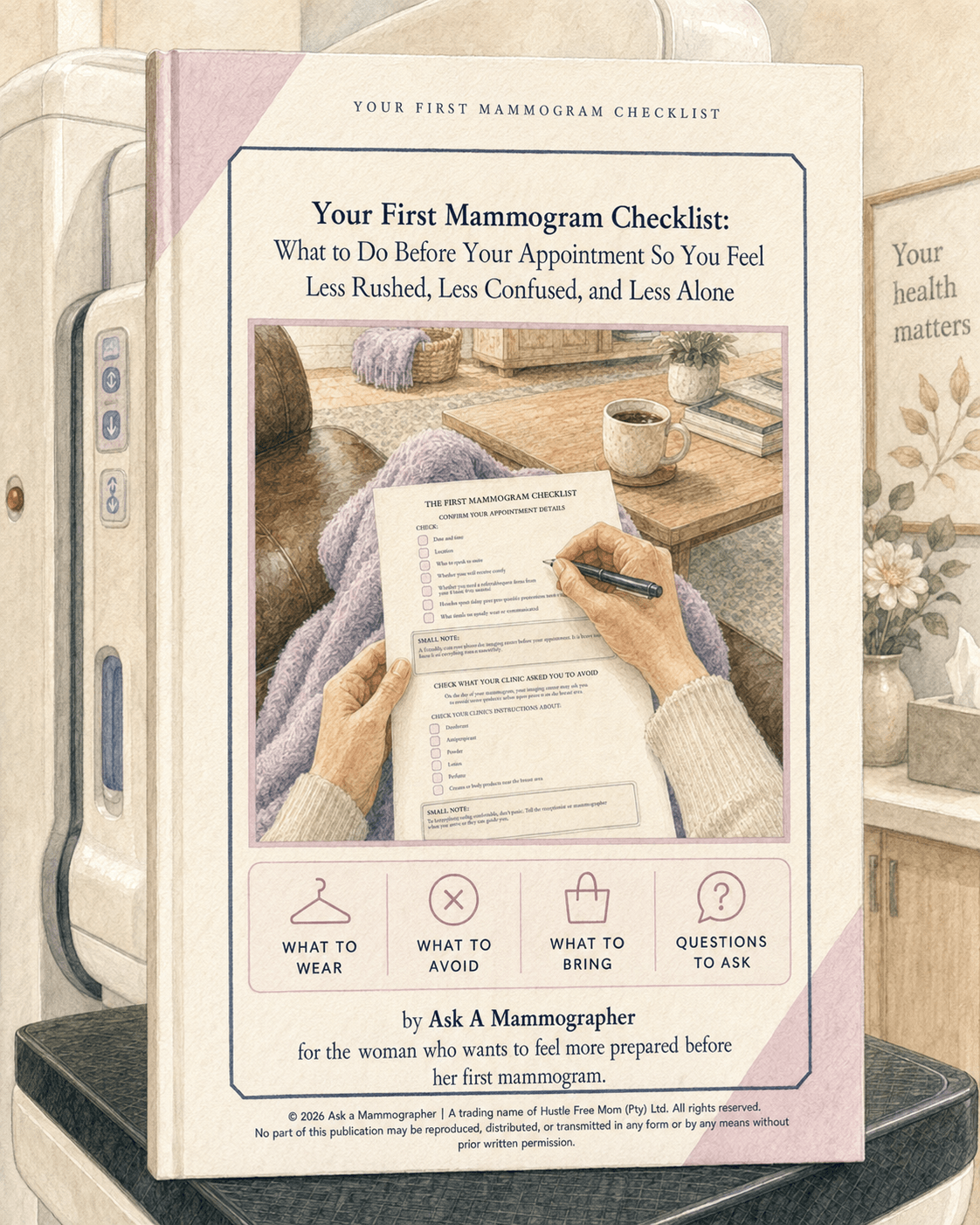
The First Mammogram Checklist covers what to wear, what to avoid, what to bring, and what you are allowed to ask. From a mammographer's perspective. Free.
Grab it here: Get the Free First Mammogram Checklist
Written by: Ask a Mammographer
This article is for general educational purposes only and is not a substitute for medical advice, diagnosis, or treatment. Always follow the guidance of your doctor, radiologist, mammographer, or healthcare provider, especially if you have symptoms, personal risk factors, or specific instructions for your appointment

Disclaimer
This guide has been created to support and prepare you for your mammogram experience. It is based on professional knowledge and real-world practice. It is not a substitute for medical advice, diagnosis, or treatment. Always follow the advice of your doctor, radiologist, or healthcare provider. Individual experiences may vary.
Follow me on Instagram

Grab Your Free First Mammogram Checklist
Have a question?
The content on this website is for general educational purposes only and does not replace medical advice, diagnosis, or treatment. Always follow the guidance of your doctor, radiologist, mammographer, or healthcare provider.
© 2026 Ask a Mammographer | A trading name of Hustle Free Mom (Pty) Ltd. All rights reserved.
Have a Question?
Follow me on Instagram
for Breast Related Information

The content on this website is for general educational purposes only and does not replace medical advice, diagnosis, or treatment. Always follow the guidance of your doctor, radiologist, mammographer, or healthcare provider.
© 2026 Ask a Mammographer | A trading name of Hustle Free Mom (Pty) Ltd. All rights reserved.