About
"The mammogram saved her life. She almost didn't go."
That's the sentence that lives in my head every single day and is the source of my energy to drive this business forward.
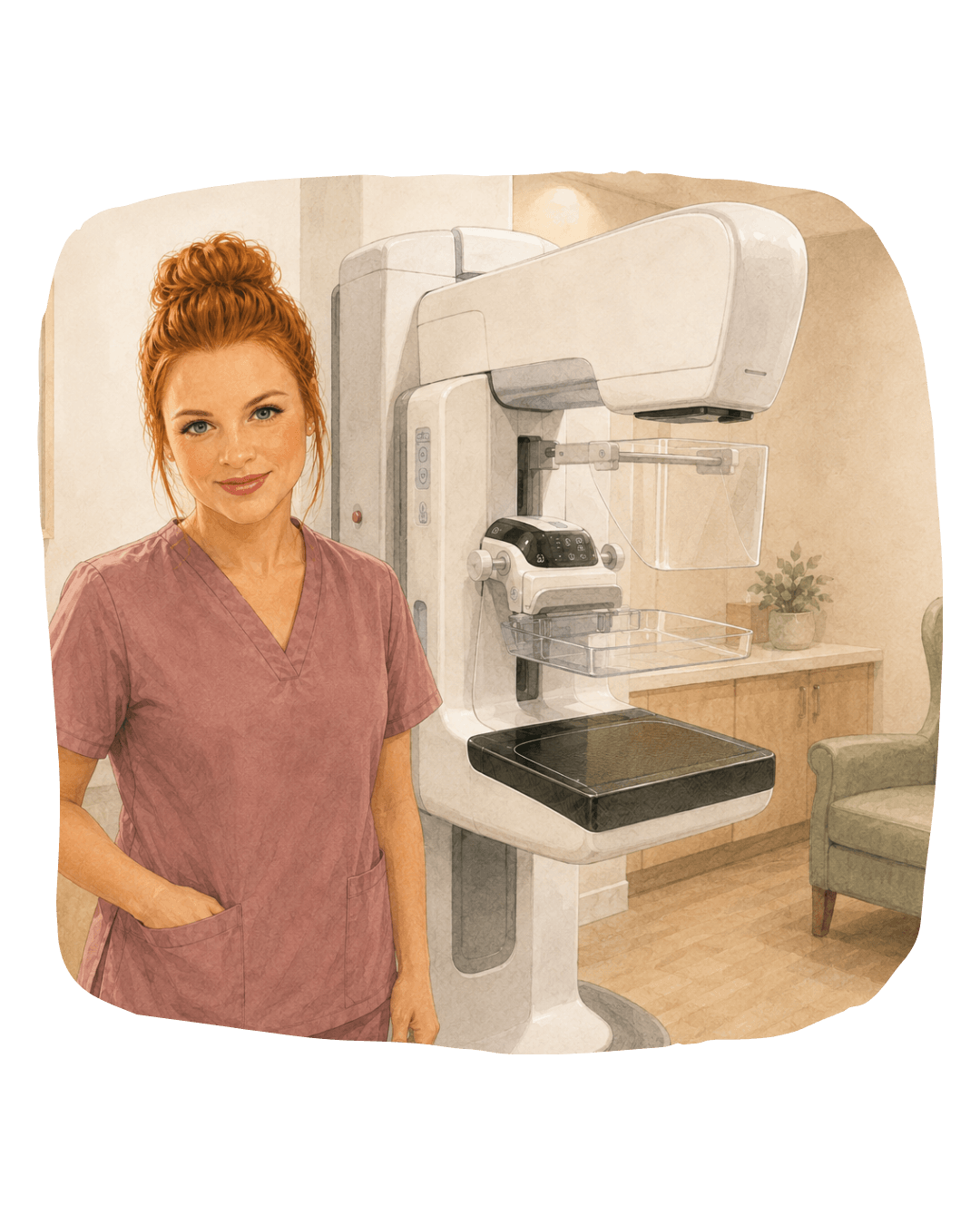
I am Anriëtte. A qualified radiographer and mammographer with nearly a decade of clinical experience. I graduated Cum Laude with my Radiography Diploma in 2013, completed my B Tech in Radiography in 2015, and qualified as a mammographer in 2017. Since then I have been part of more mammograms than I can count and I have sat with more women than I ever expected to sit with, after the results came back.
I have celebrated negative results with tears of relief. I have held ice packs after biopsies. I have dried tears after they received bad news. I have followed women from their first mammogram through their breast health journey. Through ultrasounds, biopsies, radiation planning CT scans, through chemo, surgery — because they kept coming back to my department, and they remembered my face. Because I was there at the beginning.
My youngest patient was nineteen years old. She was diagnosed with bilateral breast cancer. She bragged to me about getting new breasts for her twenty-first birthday. Breast cancer is not an old lady disease. And a mammogram is the tool that catches it early enough to do something about it.
So why does Ask a Mammographer exist?
Because I got tired of watching women talk each other out of going.
I watched the fearmongering spread on social media about painful mammograms— women who had difficult experiences sharing their stories in ways that terrified the women who hadn't gone yet. And those women — the ones who actually needed to go, whose lives were quietly at risk — stayed home.
I recently saw a woman on Threads say that she would rather treat herself to a spa day with her mammogram funds than deal with the inconvenience of a mammogram. And another woman — who had been through bilateral breast cancer, chemo, radiation, a double mastectomy, metastases to her liver and her brain, and a five year prognosis — responded to her. I will not repeat what she said. But I heard her heart in every word.
The compression is uncomfortable. It is not painful. It takes seconds. The machine doesn't use metal plates. That is a myth. You can have a mammogram on small breasts, large breasts, and in some cases during pregnancy. The mammogram does not cause cancer. It finds it.
What women are actually afraid of is not the machine. It's not the compression. It's not even the radiographer touching their breasts.
They are afraid of hearing the words breast cancer.
And I understand that fear completely. But avoiding the test doesn't make the cancer less likely. It just makes it less likely to be found in time.
What I used to do over the phone, I now put in writing.
Before I ever thought about knowledge products, I was already doing this. When I booked patients in for their mammograms, I told them exactly what to expect — what to wear, what not to apply, how the compression works, why it is done that way, what happens after. I was prepping women for their mammograms long before I realised that was the gap. I was walking them through the journey before they even set foot in the mammogram room.
Ask a Mammographer is that conversation. Written down, available any time, for every woman who has a question she doesn't know how to ask or a fear she hasn't told anyone about.
What you will find here is not what you find on Google or free information on websites. It's not AI-generated information. It's nine years of clinical experience, thousands of real patient interactions, and genuine care for your breast health from someone who has been in that room with you, or someone just like you, more times than she can count.
You're not being dramatic. Your fear is valid. And the most powerful thing you can do with it is walk through the door anyway.
I am here to make sure you know exactly what to expect when you do.
I am also the founder of Hustle Free Mom — where I help working professionals turn their knowledge, experience and expertise into expertise-base businesses, exactly the way I did here. If that sounds like something you have been thinking about, you are welcome to take a look.
"The mammogram saved her life. She almost didn't go."
That's the sentence that lives in my head every single day and is the source of my energy to drive this business forward.
I am Anriëtte. A qualified radiographer and mammographer with nearly a decade of clinical experience. I graduated Cum Laude with my Radiography Diploma in 2013, completed my B Tech in Radiography in 2015, and qualified as a mammographer in 2017. Since then I have been part of more mammograms than I can count and I have sat with more women than I ever expected to sit with, after the results came back.
I have celebrated negative results with tears of relief. I have held ice packs after biopsies. I have dried tears after they received bad news. I have followed women from their first mammogram through their breast health journey. Through ultrasounds, biopsies, radiation planning CT scans, through chemo, surgery — because they kept coming back to my department, and they remembered my face. Because I was there at the beginning.
My youngest patient was nineteen years old. She was diagnosed with bilateral breast cancer. She bragged to me about getting new breasts for her twenty-first birthday. Breast cancer is not an old lady disease. And a mammogram is the tool that catches it early enough to do something about it.
So why does Ask a Mammographer exist?
Because I got tired of watching women talk each other out of going.
I watched the fearmongering spread on social media about painful mammograms— women who had difficult experiences sharing their stories in ways that terrified the women who hadn't gone yet. And those women — the ones who actually needed to go, whose lives were quietly at risk — stayed home.
I recently saw a woman on Threads say that she would rather treat herself to a spa day with her mammogram funds than deal with the inconvenience of a mammogram. And another woman — who had been through bilateral breast cancer, chemo, radiation, a double mastectomy, metastases to her liver and her brain, and a five year prognosis — responded to her. I will not repeat what she said. But I heard her heart in every word.
The compression is uncomfortable. It is not painful. It takes seconds. The machine doesn't use metal plates. That is a myth. You can have a mammogram on small breasts, large breasts, and in some cases during pregnancy. The mammogram does not cause cancer. It finds it.
What women are actually afraid of is not the machine. It's not the compression. It's not even the radiographer touching their breasts.
They are afraid of hearing the words breast cancer.
And I understand that fear completely. But avoiding the test doesn't make the cancer less likely. It just makes it less likely to be found in time.
What I used to do over the phone, I now put in writing.
Before I ever thought about knowledge products, I was already doing this. When I booked patients in for their mammograms, I told them exactly what to expect — what to wear, what not to apply, how the compression works, why it is done that way, what happens after. I was prepping women for their mammograms long before I realised that was the gap. I was walking them through the journey before they even set foot in the mammogram room.
Ask a Mammographer is that conversation. Written down, available any time, for every woman who has a question she doesn't know how to ask or a fear she hasn't told anyone about.
What you will find here is not what you find on Google or free information on websites. It's not AI-generated information. It's nine years of clinical experience, thousands of real patient interactions, and genuine care for your breast health from someone who has been in that room with you, or someone just like you, more times than she can count.
You're not being dramatic. Your fear is valid. And the most powerful thing you can do with it is walk through the door anyway.
I am here to make sure you know exactly what to expect when you do.
Anriëtte is also the founder of Hustle Free Mom — where she helps working professionals turn their knowledge, experience and expertise into expertise-base businesses, exactly the way she did here. If that sounds like something you have been thinking about, you are welcome to take a look.